

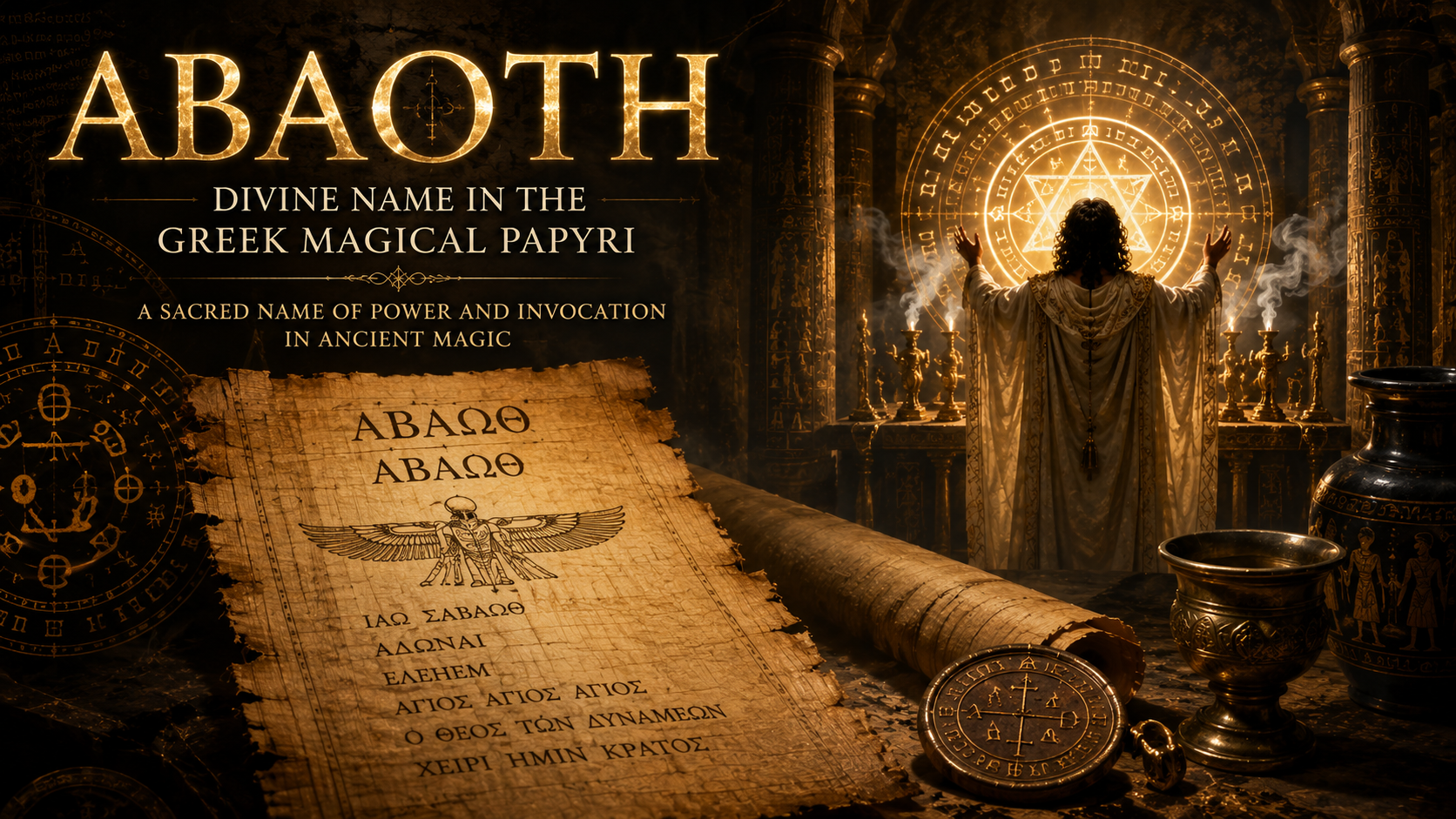
Abaoth is a mysterious divine name that appears in the Greek Magical Papyri (PGM), a remarkable collection of magical texts compiled in Roman Egypt between roughly the second century BC and the fifth century AD. Unlike the familiar gods of Greek or Egyptian mythology, Abaoth is not accompanied by myths, temples, or genealogies. Instead, the name appears within ritual invocations alongside numerous other sacred names believed to possess supernatural power.
The Greek Magical Papyri preserve a unique blend of Egyptian, Greek, Jewish, and Near Eastern religious traditions. Within these texts, names such as Abaoth were invoked during ceremonies seeking divine protection, healing, revelation, spiritual authority, or communication with higher powers.
Although little is known about Abaoth itself, the name offers a fascinating glimpse into the multicultural religious world of late antiquity and the evolving traditions of ritual magic.
What Is Abaoth?
Abaoth is best understood as a divine or sacred magical name rather than a fully developed deity.
The Greek Magical Papyri frequently preserve long sequences of mysterious names that practitioners believed carried spiritual authority. Many of these names combine elements drawn from multiple languages, including Greek, Egyptian, Hebrew, and Aramaic.
Rather than representing individual gods with distinct personalities, these names often functioned as powerful words invoked during magical rituals.
Abaoth in the Greek Magical Papyri
The Greek Magical Papyri are among the most important surviving sources for the study of ancient magic.
Discovered primarily in Egypt during the nineteenth century, the papyri contain hundreds of spells, hymns, prayers, and ritual instructions covering subjects such as:
- Protection
- Healing
- Love magic
- Divination
- Dream revelation
- Exorcism
- Spirit communication
- Invocation of divine powers
Within these rituals, Abaoth appears among sacred names intended to strengthen the effectiveness of the invocation.
Meaning of the Name Abaoth
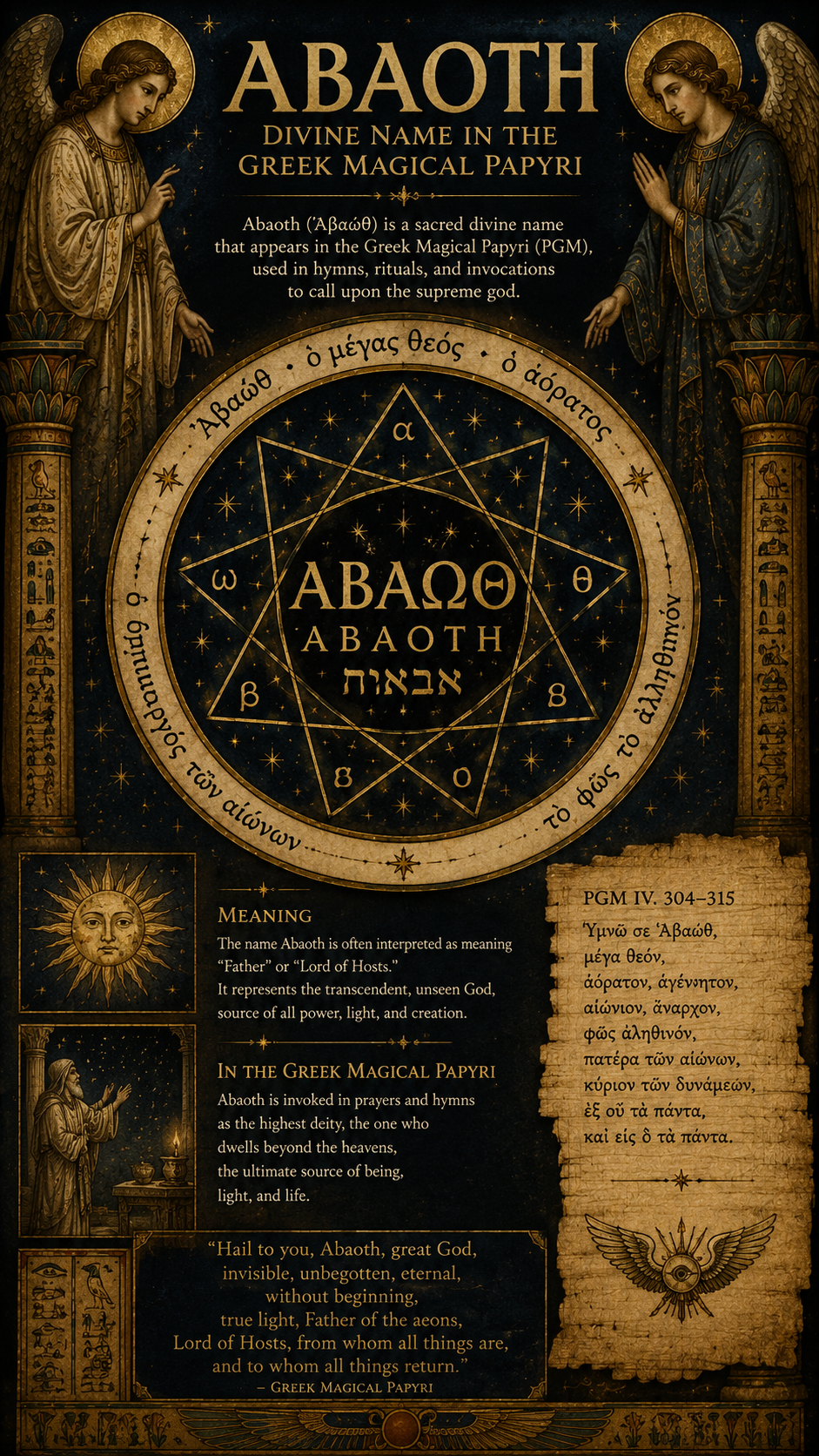
The precise meaning of Abaoth remains uncertain. Many scholars believe it belongs to the tradition of voces magicae, specialized magical words whose perceived power came from their sound, sacred associations, or ancient origin rather than from a literal translation. Some researchers have suggested that names like Abaoth may preserve echoes of Hebrew or Semitic divine traditions, although no definitive etymology has been established. Because the surviving evidence is limited, historians avoid assigning a specific linguistic meaning without direct manuscript support.Role in Ancient Ritual Magic
Unlike major deities who possessed temples and organized priesthoods, Abaoth appears within ritual texts as part of spoken invocations. Ancient magicians believed that correctly pronouncing sacred names could:- Invoke divine authority
- Strengthen prayers
- Protect the practitioner
- Enhance ritual effectiveness
- Establish communication with spiritual beings
Historical Context
The Greek Magical Papyri reflect one of history’s most diverse religious environments. Roman Egypt brought together traditions from:- Ancient Egypt
- Classical Greece
- Judaism
- Mesopotamia
- Rome
- Early Christianity
Is Abaoth a God?
There is no surviving evidence that Abaoth was worshipped as an independent god with myths, temples, or a dedicated cult. Instead, historians generally classify Abaoth as a divine magical name used within ritual practice. This distinction is important because the Greek Magical Papyri contain hundreds of sacred names that function differently from the traditional gods of classical mythology.Symbolism
Because the papyri do not describe Abaoth visually, any modern artwork represents an artistic interpretation rather than a historical reconstruction. Artists often associate names from the Greek Magical Papyri with imagery such as:- Glowing papyrus scrolls
- Sacred circles
- Temple sanctuaries
- Celestial light
- Ancient Egyptian ritual spaces
- Mystical inscriptions
Historical Sources
The principal source mentioning Abaoth is the Greek Magical Papyri (PGM). Related studies often examine:- Greco-Egyptian magic
- Voces magicae
- Ancient ritual practice
- Roman Egyptian religion
- Syncretism in Late Antiquity
Frequently Asked Questions
Is Abaoth a deity?
Modern scholars generally describe Abaoth as a divine or sacred magical name rather than an independent deity.
Where is Abaoth mentioned?
Abaoth appears in the Greek Magical Papyri, a collection of magical texts compiled in Roman Egypt.
What does Abaoth mean?
Its exact meaning is unknown. Most researchers classify it as one of the voces magicae, or sacred magical names, found in ancient ritual texts.
Was Abaoth worshipped?
There is no evidence of temples, priesthoods, or organized worship dedicated specifically to Abaoth.
Is Abaoth connected to other religions?
Possibly. Like many names in the Greek Magical Papyri, Abaoth may reflect the blending of Greek, Egyptian, Jewish, and Near Eastern religious traditions, though its precise origin remains uncertain.
Abaoth is one of the many enigmatic sacred names preserved in the Greek Magical Papyri, offering a window into the rich ritual traditions of Roman Egypt. While not a deity in the conventional sense, the name formed part of a broader magical vocabulary that practitioners believed carried divine authority and spiritual power.
Although its exact meaning has been lost to history, Abaoth remains an intriguing example of the multicultural religious landscape that shaped ancient ceremonial magic.