

Ageel is an obscure spirit whose name appears in the Magical Treatise of Solomon, one of the lesser-known Solomonic magical manuscripts preserved in the Greek magical tradition. Unlike famous spirits found in the Lesser Key of Solomon, Ageel survives primarily as a name within ritual texts, with little additional historical information about its nature or function.
Although the surviving manuscripts provide few details, Ageel is part of the remarkable collection of angelic, spirit, and divine names, as well as ritual invocations, that characterize the Solomonic magical tradition. These texts preserve a fascinating glimpse into the ceremonial practices of the medieval eastern Mediterranean, where Jewish, Christian, Greek, and Near Eastern traditions intersected.
Today, Ageel is studied chiefly by historians of Western esotericism, manuscript scholars, and researchers interested in medieval ceremonial magic.
Who Is Ageel?
Ageel is one of the many little-known spiritual beings preserved in the Magical Treatise of Solomon.
Unlike the famous angels and demons of later grimoires, the manuscript does not provide a narrative explaining Ageel’s origin, appearance, rank, or responsibilities. Instead, the name appears as part of ritual material intended for ceremonial use.
Many figures preserved in medieval magical manuscripts survive in a similar way, with only their names remaining while much of their original context has been lost.
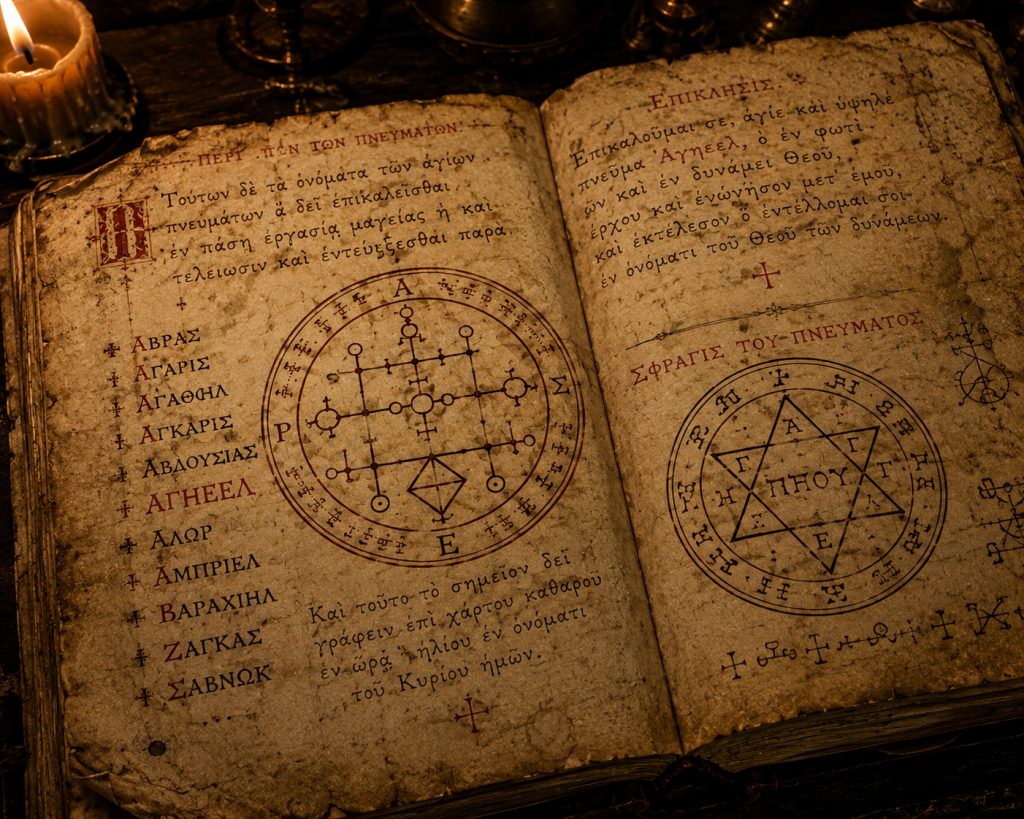
Ageel in the Magical Treatise of Solomon
The Magical Treatise of Solomon belongs to the broader family of Solomonic magical literature traditionally attributed to the wisdom of King Solomon.
These manuscripts commonly contain:
- Divine names
- Angelic names
- Spirit names
- Ritual prayers
- Protective invocations
- Ceremonial instructions
- Sacred symbols
Ageel appears within this ritual framework, demonstrating the diversity of supernatural beings preserved in medieval magical texts.
Meaning of the Name Ageel
The exact meaning of Ageel is uncertain.
Some scholars note that the ending -el is commonly associated with Hebrew names referring to God, as seen in names such as Michael, Gabriel, and Raphael.
If Ageel shares this linguistic pattern, the name may have originally possessed a Hebrew-derived meaning connected with God. However, no surviving manuscript explicitly explains its etymology, making any proposed translation speculative.
For this reason, historians generally avoid assigning a definitive meaning without direct textual evidence.
Role in Solomonic Magic
The Magical Treatise of Solomon does not describe Ageel’s specific function.
Unlike later grimoires that assign spirits individual offices or powers, this manuscript often presents names within ritual contexts without detailed explanations.
Ageel therefore serves primarily as an example of the many lesser-known supernatural beings invoked or acknowledged within Solomonic ceremonial practice.
Appearance
No historical description of Ageel survives.
The manuscript does not describe:
- Physical appearance
- Clothing
- Symbols
- Sigils
- Weapons
- Colors
- Attributes
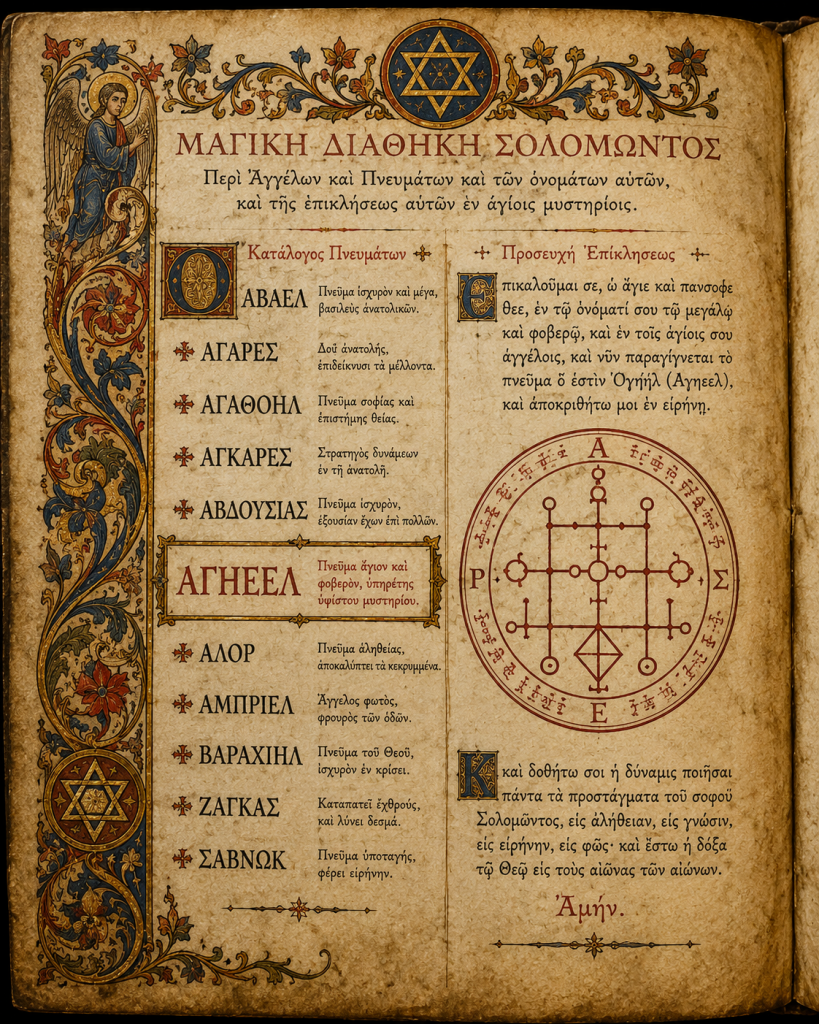
Modern illustrations portraying Ageel are therefore artistic interpretations inspired by the broader visual tradition of medieval grimoires rather than historical reconstructions.
Historical Context
The Magical Treatise of Solomon reflects centuries of religious and magical development throughout the eastern Mediterranean.
Its traditions combine influences from:
- Jewish mysticism
- Byzantine Christianity
- Greek ritual practice
- Earlier Near Eastern magical traditions
Within this environment, numerous obscure names like Ageel were preserved as part of ceremonial invocations that blended sacred language with ritual symbolism.
Why Is So Little Known About Ageel?
Many medieval grimoires exist in only a handful of handwritten manuscripts.
Over centuries, damaged pages, copying mistakes, and incomplete texts caused valuable contextual information to disappear.
As a result, some spirits survive only as names recorded within ritual lists.
Ageel is one such figure, illustrating both the richness and the fragmentary nature of medieval magical literature.
Historical Sources
The principal historical source mentioning Ageel is:
- The Magical Treatise of Solomon
Related topics include:
- Solomonic magic
- Ceremonial magic
- Medieval grimoires
- Greek magical manuscripts
- Western esotericism
Frequently Asked Questions
Is Ageel mentioned in the Bible?
No. Ageel does not appear in the canonical books of the Bible.
Is Ageel an angel or a demon?
The surviving manuscripts do not clearly classify Ageel. Modern scholars generally describe it simply as a spirit mentioned in the Magical Treatise of Solomon.
Where is Ageel mentioned?
Ageel appears in the Magical Treatise of Solomon, one of the lesser-known Solomonic magical manuscripts.
What does Ageel mean?
The exact meaning is unknown. Although the name ends with -el, suggesting a possible Hebrew connection, no historical manuscript provides an explicit translation.
What powers does Ageel have?
No specific powers or responsibilities are assigned to Ageel in the surviving manuscript.
Ageel is one of the many enigmatic names preserved in the Magical Treatise of Solomon, reflecting the remarkable diversity of supernatural beings recorded in medieval ceremonial magic. While the historical evidence surrounding Ageel is limited, the spirit’s inclusion within the manuscript offers valuable insight into the ritual traditions and manuscript culture that shaped the Solomonic magical corpus.
Rather than inventing mythology where none survives, studying Ageel through its original source allows modern readers to appreciate both the richness and the mystery of the medieval grimoire tradition.
Please note: Very little historical iconography of Ageel exists; these illustrations are artistic reconstructions inspired by the Magical Treatise of Solomon, not historical depictions.