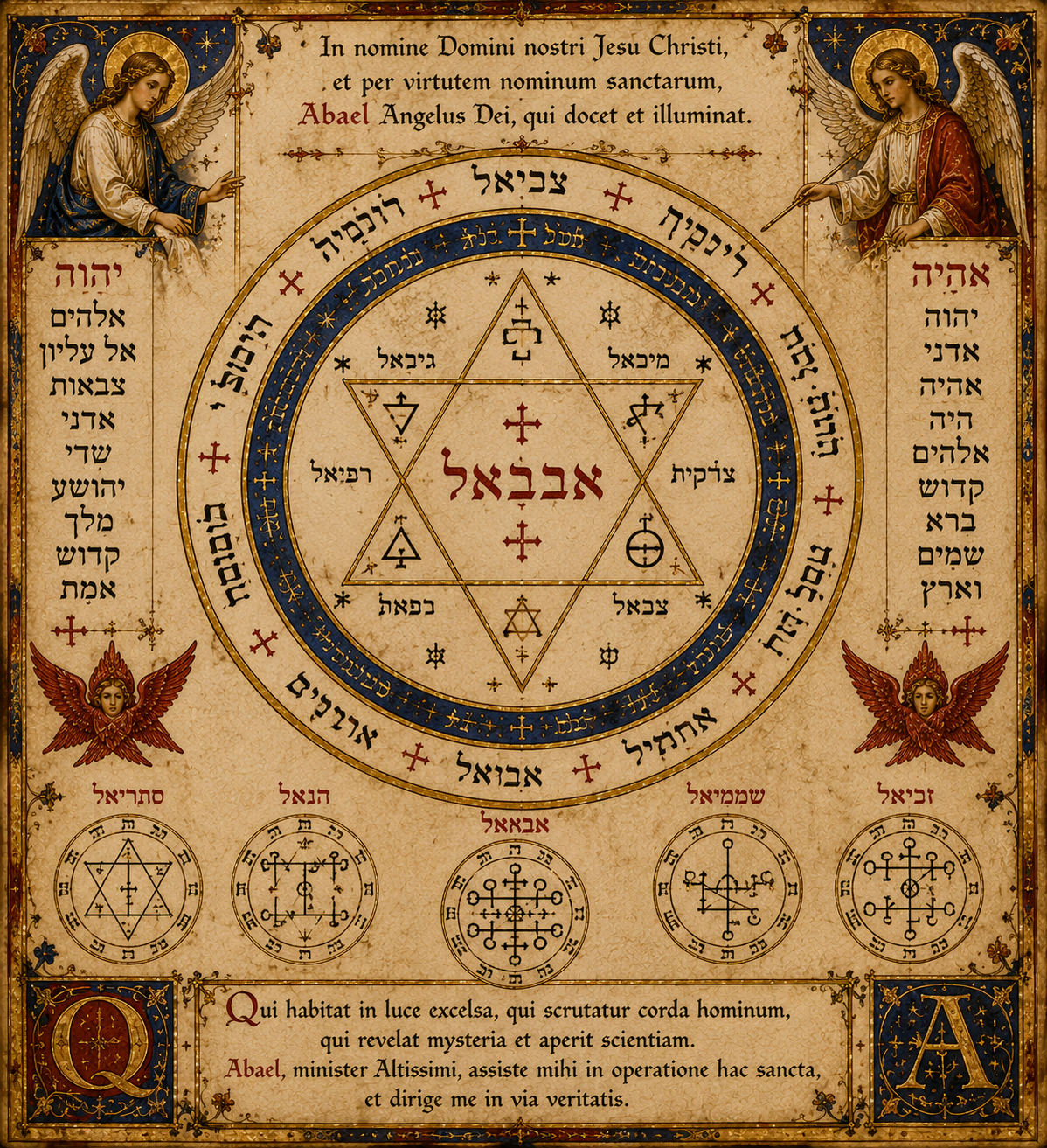

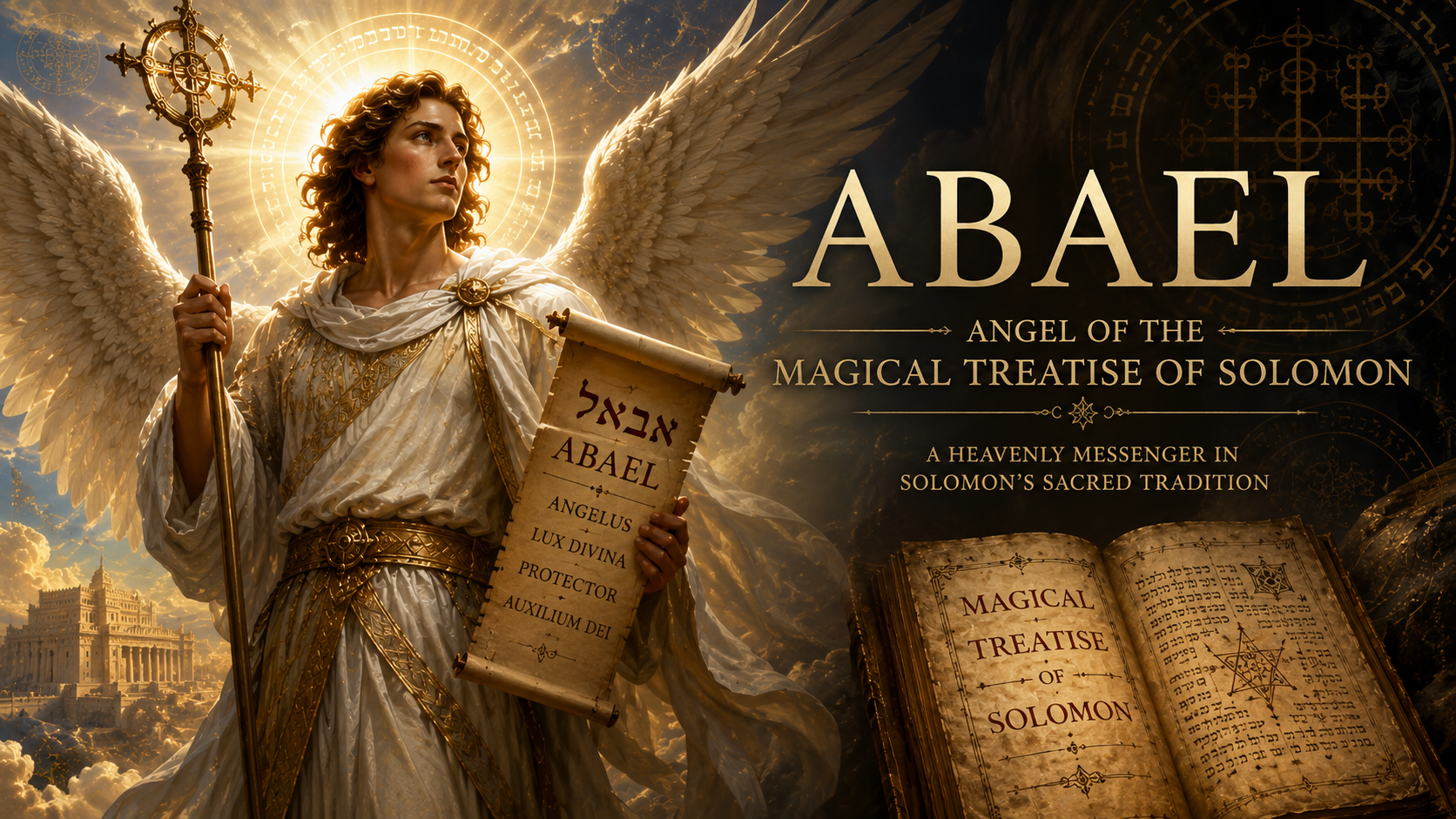
Abael is an angelic figure mentioned in the Magical Treatise of Solomon, a Solomonic magical text that forms part of the broader tradition of ceremonial magic attributed to King Solomon. Unlike the archangels of the Bible, Abael is known almost exclusively through magical manuscripts rather than religious scripture.
Although little information survives about Abael compared to more famous angels, his inclusion within a Solomonic grimoire places him among the many spiritual beings invoked as part of ritual practices intended to seek divine assistance, protection, wisdom, or authority over spirits.
Today, Abael is primarily studied by historians of Western esotericism, students of angelology, and researchers interested in medieval and Renaissance grimoires.
Who Is Abael?
Abael is an angel whose name appears in the Magical Treatise of Solomon, a collection of magical instructions attributed to the legendary wisdom of King Solomon.
Unlike many well-known angels, Abael is not given an extensive biography or mythology. Instead, he appears within lists of sacred names and angelic beings used in ritual operations.
In Solomonic magic, angels were typically understood as servants of God who assisted the practitioner when rituals were performed correctly and with divine permission.
Abael in the Magical Treatise of Solomon
The Magical Treatise of Solomon belongs to the wider family of Solomonic magical literature.
These texts generally include:
- Angelic names
- Divine names
- Ritual prayers
- Protective invocations
- Instructions for ceremonial magic
- Methods for invoking heavenly assistance
Within this tradition, angels such as Abael function as divine intermediaries rather than objects of worship.
Unlike later fictional portrayals, the spirits listed in these manuscripts were intended to operate within a religious framework centered on God’s authority.
What Does the Name Abael Mean?
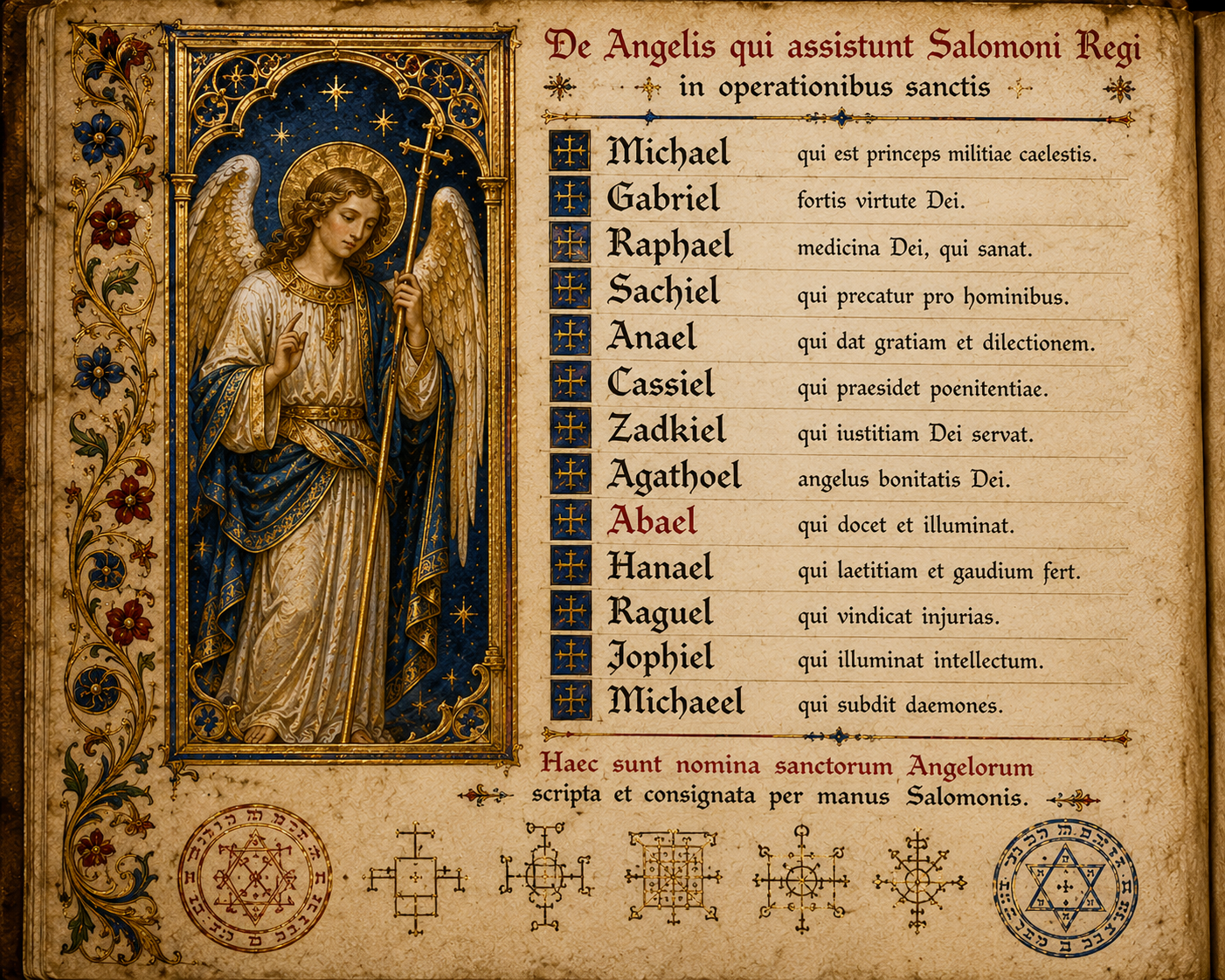
The precise origin of the name Abael remains uncertain.
Many angelic names found in grimoires share common linguistic features:
- The suffix “-el” comes from the Hebrew word for God.
- This ending appears in numerous angelic names, including Michael, Gabriel, Raphael, Uriel, and Zadkiel.
Because of this pattern, scholars generally recognize Abael as belonging to the traditional style of Hebrew-derived angelic names, although its exact etymology has not been conclusively identified.
Abael’s Role
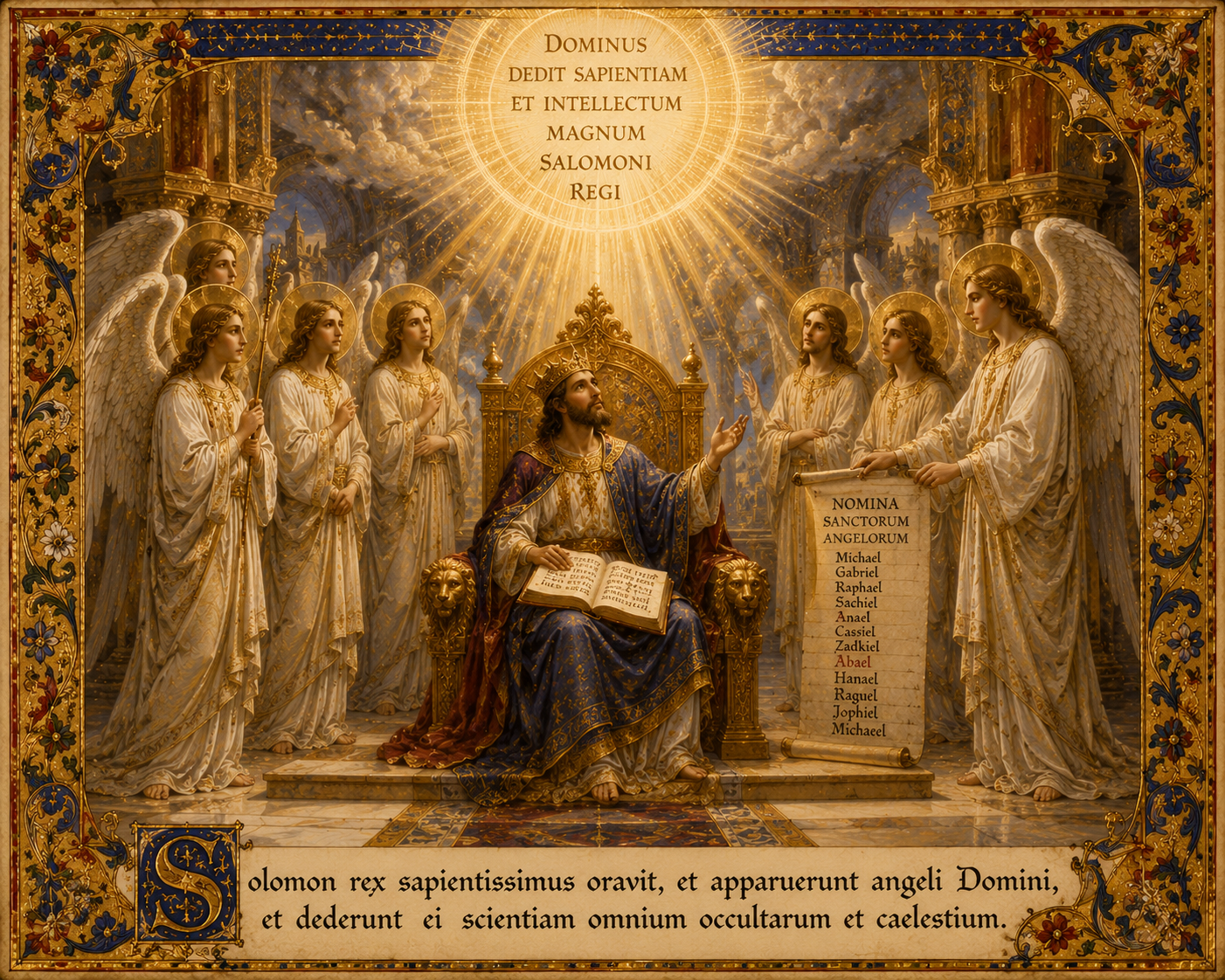
The surviving manuscripts do not assign Abael an extensive list of responsibilities. Instead, his significance comes from his inclusion among the sacred angelic names used during ritual work. Within Solomonic ceremonial traditions, angels commonly served roles such as:- Providing divine protection
- Assisting sacred rituals
- Guarding practitioners
- Bearing divine authority
- Helping establish spiritual order
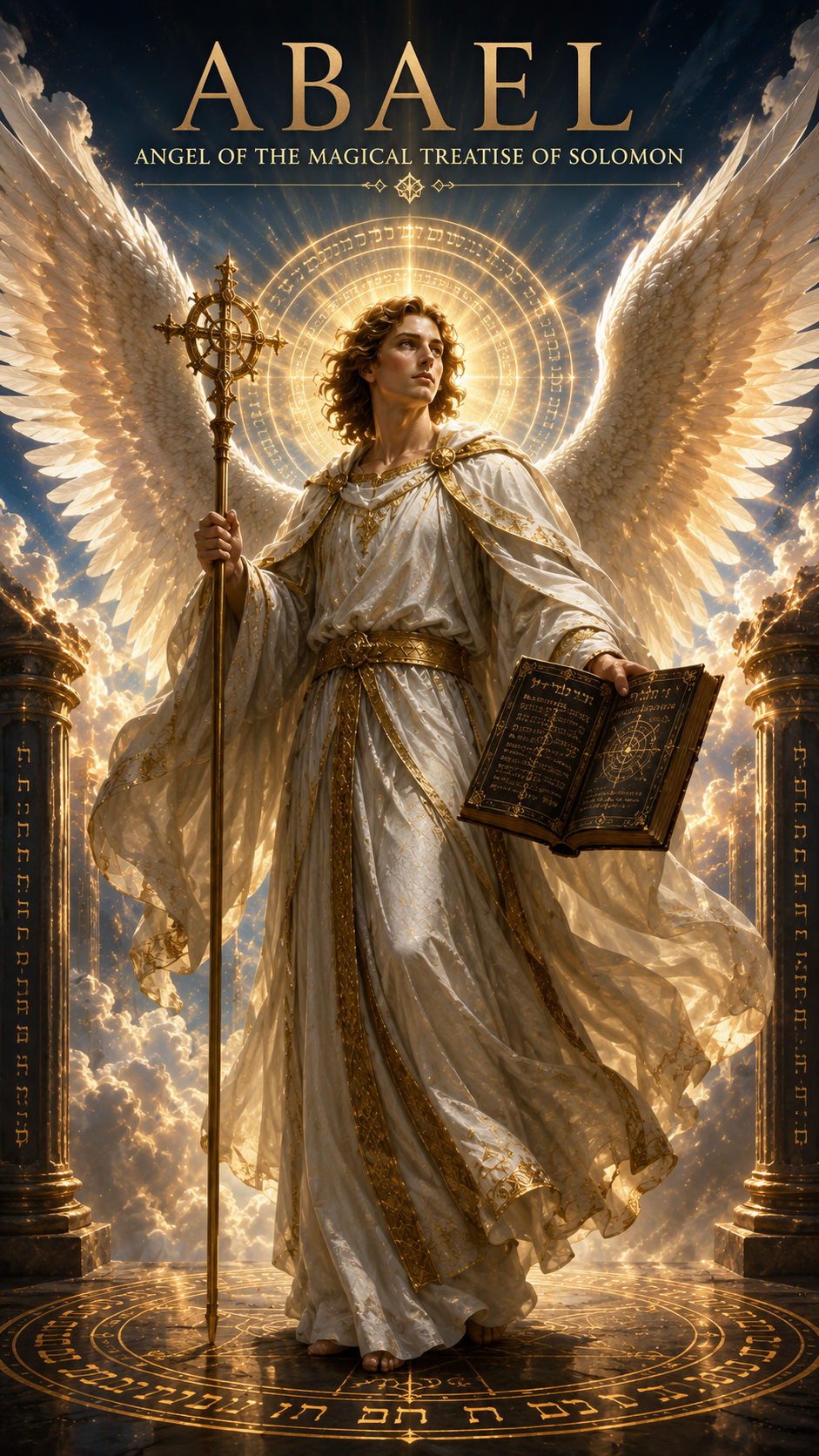
Appearance
Unlike many angels depicted in religious art or later mystical writings, Abael is not physically described in the Magical Treatise of Solomon.
Artists who depict Abael today generally draw upon traditional angelic imagery, portraying him as:
- A radiant heavenly messenger
- Clothed in white or gold robes
- Surrounded by divine light
- Carrying a staff, scroll, or sword
These artistic interpretations are modern creations rather than historical descriptions.
Abael in Solomonic Magic
Solomonic grimoires distinguish between angels and demons.
While demons are often portrayed as spirits compelled through divine authority, angels are invoked through prayer, sacred names, and appeals to God.
Within this tradition, angelic beings such as Abael symbolize heavenly authority and divine assistance rather than independent supernatural power.
Historical Context
Many Solomonic magical texts were compiled between Late Antiquity and the Renaissance, although they frequently claim to preserve the ancient wisdom of King Solomon.
Modern historians generally regard these works as products of centuries of Jewish, Christian, Byzantine, and medieval magical traditions.
The Magical Treatise of Solomon reflects this broader history, preserving numerous angelic names that are absent from biblical scripture but significant within ceremonial magic.
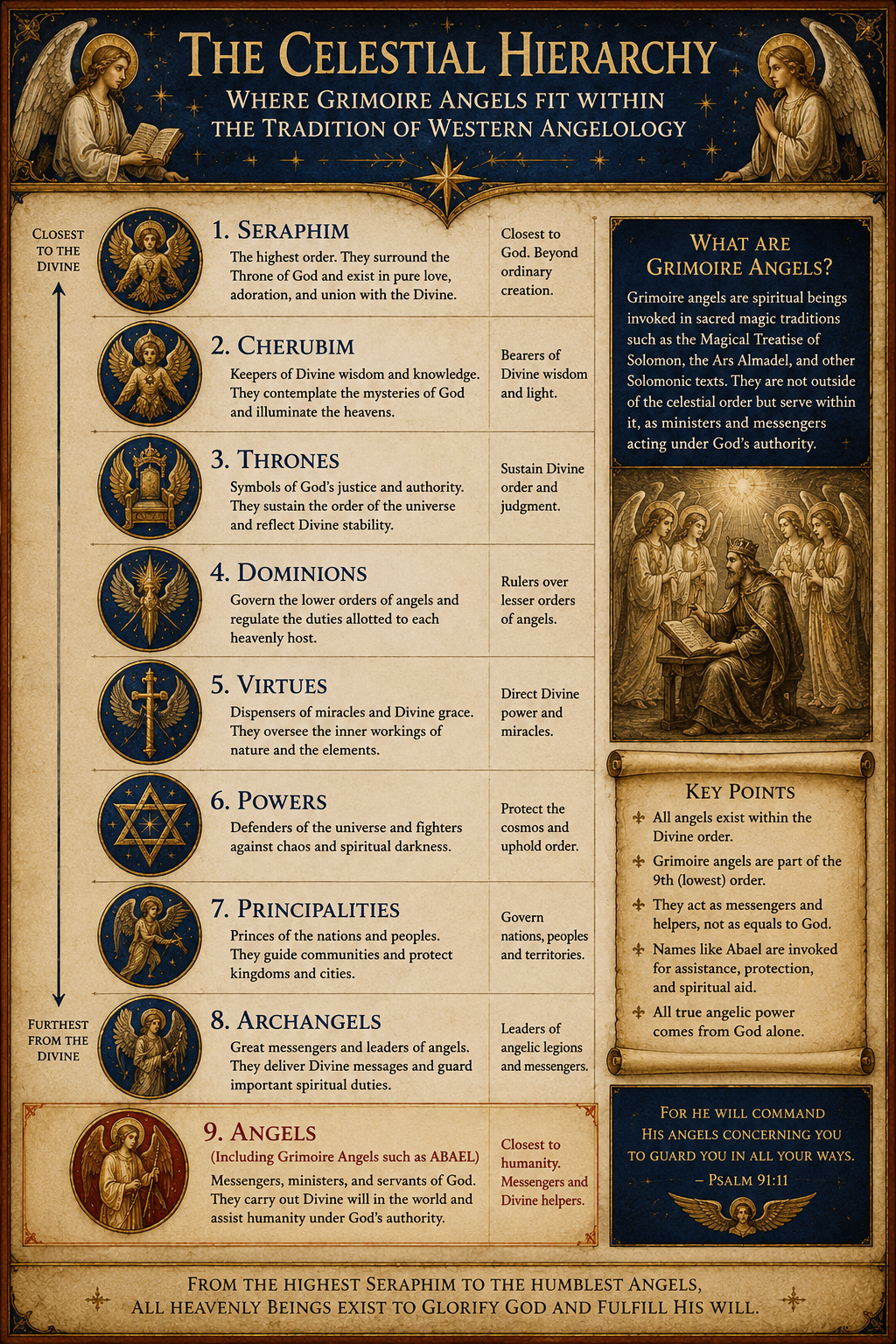
Abael in Modern Esotericism
Modern occult writers occasionally reference Abael in discussions of Solomonic angelology.
Because historical information is extremely limited, most contemporary descriptions rely directly upon the original manuscripts rather than later folklore.
Academic researchers generally study Abael as part of the development of Western esotericism instead of treating the figure as part of mainstream religious belief.
Historical Sources
The principal historical source for Abael is:
- The Magical Treatise of Solomon
Related studies often examine the broader tradition of:
- Solomonic grimoires
- Medieval ceremonial magic
- Angelology
- Byzantine magical manuscripts
Frequently Asked Questions
Is Abael mentioned in the Bible?
No. Abael does not appear in the canonical books of the Bible.
Is Abael an archangel?
No surviving historical source identifies Abael as an archangel.
Where is Abael mentioned?
Abael appears in the Magical Treatise of Solomon, one of the lesser-known Solomonic magical manuscripts.
What powers does Abael have?
The surviving manuscripts do not assign specific powers or domains to Abael. His importance lies primarily in his role as one of the angelic names used within Solomonic ritual traditions.