

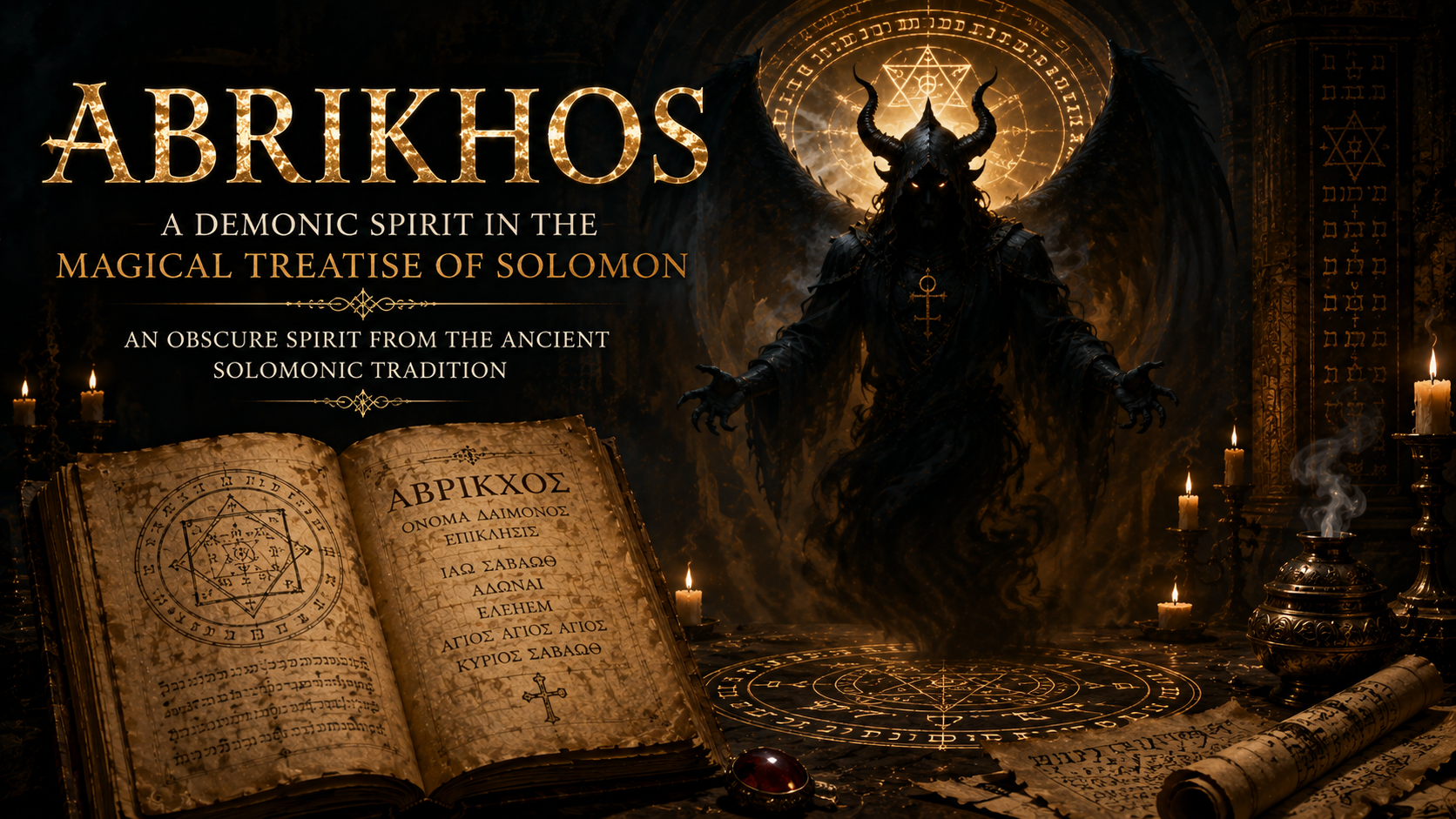
Abrikhos is an obscure spirit whose name appears in the Magical Treatise of Solomon, a medieval Solomonic grimoire preserved in the Greek magical tradition. Unlike the famous demons of the Lesser Key of Solomon, Abrikhos is mentioned only briefly and lacks a detailed description, rank, seal, or mythology.
Although little historical information survives, Abrikhos illustrates the rich and often overlooked tradition of lesser-known spirits preserved in Solomonic manuscripts. These texts contain hundreds of angelic names, divine names, and spirits that never became widely known outside the world of ceremonial magic.
Today, Abrikhos is primarily studied by historians of Western esotericism and researchers interested in the evolution of Solomonic grimoires.
Who Is Abrikhos?
Abrikhos is a spirit named in the Magical Treatise of Solomon, one of several magical texts attributed to the legendary wisdom of King Solomon.
Unlike the seventy-two demons described in the Ars Goetia, Abrikhos is not presented as a ruler of Hell or commander of infernal legions. Instead, the name appears within the ritual framework of the manuscript alongside numerous other spiritual beings invoked or addressed during ceremonial operations.
Because the surviving text offers few details, historians avoid assigning characteristics that are not supported by the original manuscript.
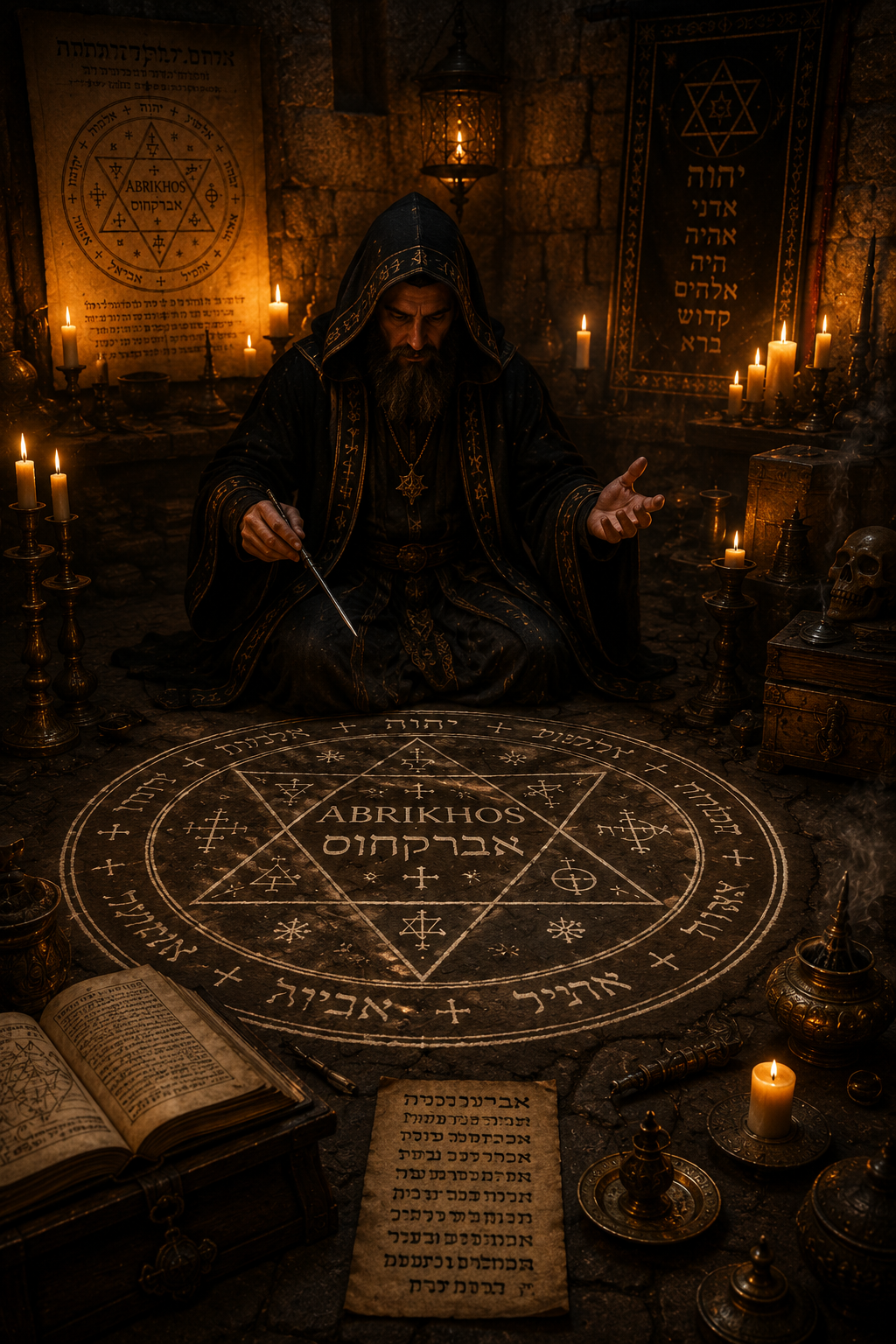
Abrikhos in the Magical Treatise of Solomon
The Magical Treatise of Solomon belongs to the broader family of Solomonic magical literature.
These manuscripts typically include:
- Ritual prayers
- Angelic names
- Divine names
- Spirit names
- Protective invocations
- Ceremonial instructions
- Sacred symbols
Abrikhos appears within this ritual tradition as one of the many names preserved by the manuscript.
Unlike later demonological works that classify spirits by rank or function, the Magical Treatise of Solomon often emphasizes ritual use rather than elaborate biographies.
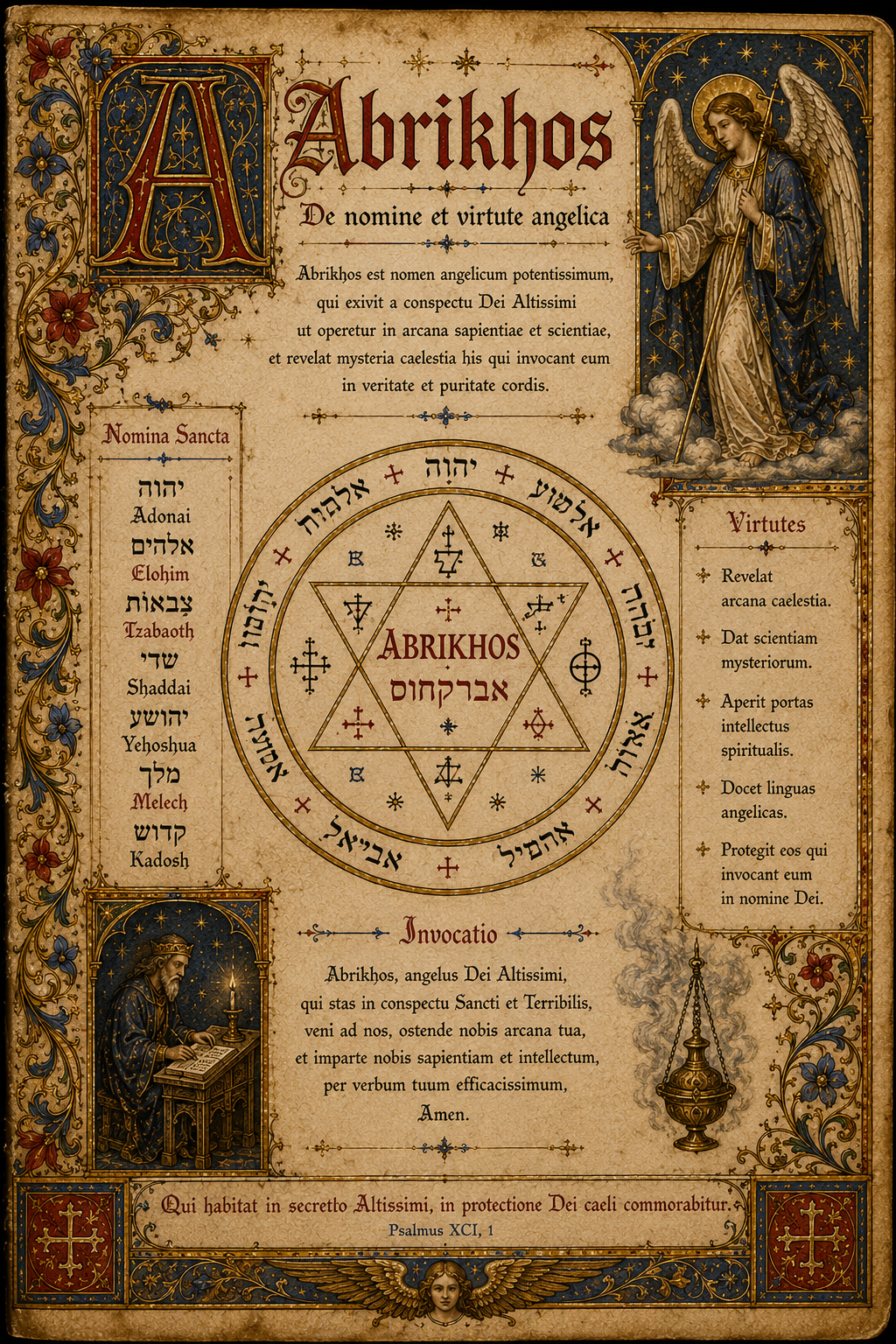
Is Abrikhos a Demon?
Modern writers sometimes describe Abrikhos as a demon because the name appears among spirits associated with magical operations.
However, the surviving manuscript does not provide a formal classification comparable to the ranks found in later grimoires.
For that reason, scholars generally describe Abrikhos simply as a spirit or demonic figure within the Solomonic magical tradition, rather than assigning titles that the source itself does not provide.
Appearance
No historical description of Abrikhos survives.
The Magical Treatise of Solomon does not record the spirit’s physical appearance, clothing, symbols, or attributes.
As a result, modern artistic depictions are entirely speculative. Illustrations often portray Abrikhos as:
- A shadowy supernatural figure
- A horned or winged spirit
- A cloaked entity emerging during ritual
- A guardian of hidden knowledge
These images should be understood as artistic interpretations rather than historical reconstructions.
Powers and Abilities
The surviving manuscript does not assign specific powers to Abrikhos.
Unlike many famous spirits in later grimoires, there are no historical claims that Abrikhos governs wealth, knowledge, love, warfare, prophecy, or other specialized domains.
This absence of information is significant because it highlights the fragmentary nature of many medieval magical manuscripts.
Rather than filling these gaps with speculation, historians rely on the limited evidence preserved in the original text.
Historical Context
The Magical Treatise of Solomon reflects the diverse religious environment of the medieval eastern Mediterranean.
Its rituals combine influences from:
- Jewish mystical traditions
- Byzantine Christianity
- Greek magical practices
- Earlier Near Eastern ceremonial traditions
Within these texts, spirits such as Abrikhos appear alongside angels, divine names, and sacred prayers, illustrating the complex spiritual cosmology of Solomonic magic.
Why Is So Little Known About Abrikhos?
Many historical grimoires survive in only a handful of handwritten manuscripts.
Over centuries, copying errors, damaged pages, and incomplete texts resulted in the loss of information about numerous lesser-known spirits.
Abrikhos appears to be one of these obscure figures whose name survived while much of the surrounding tradition did not.
This is not unusual. Many spirits recorded in medieval magical manuscripts receive only a passing mention.
Historical Sources
The principal historical source mentioning Abrikhos is:
- The Magical Treatise of Solomon
Related subjects include:
- Solomonic magic
- Medieval grimoires
- Ceremonial magic
- Greek magical manuscripts
- Western esotericism
Frequently Asked Questions
Is Abrikhos mentioned in the Bible?
No. Abrikhos does not appear in the canonical books of the Bible.
Is Abrikhos one of the 72 demons of the Goetia?
No. Abrikhos is not listed among the seventy-two spirits of the Ars Goetia.
Where is Abrikhos mentioned?
The name appears in the Magical Treatise of Solomon, a lesser-known Solomonic magical manuscript.
What does Abrikhos look like?
The historical manuscript does not describe the spirit’s appearance.
What powers does Abrikhos have?
No specific powers are assigned to Abrikhos in the surviving manuscript.
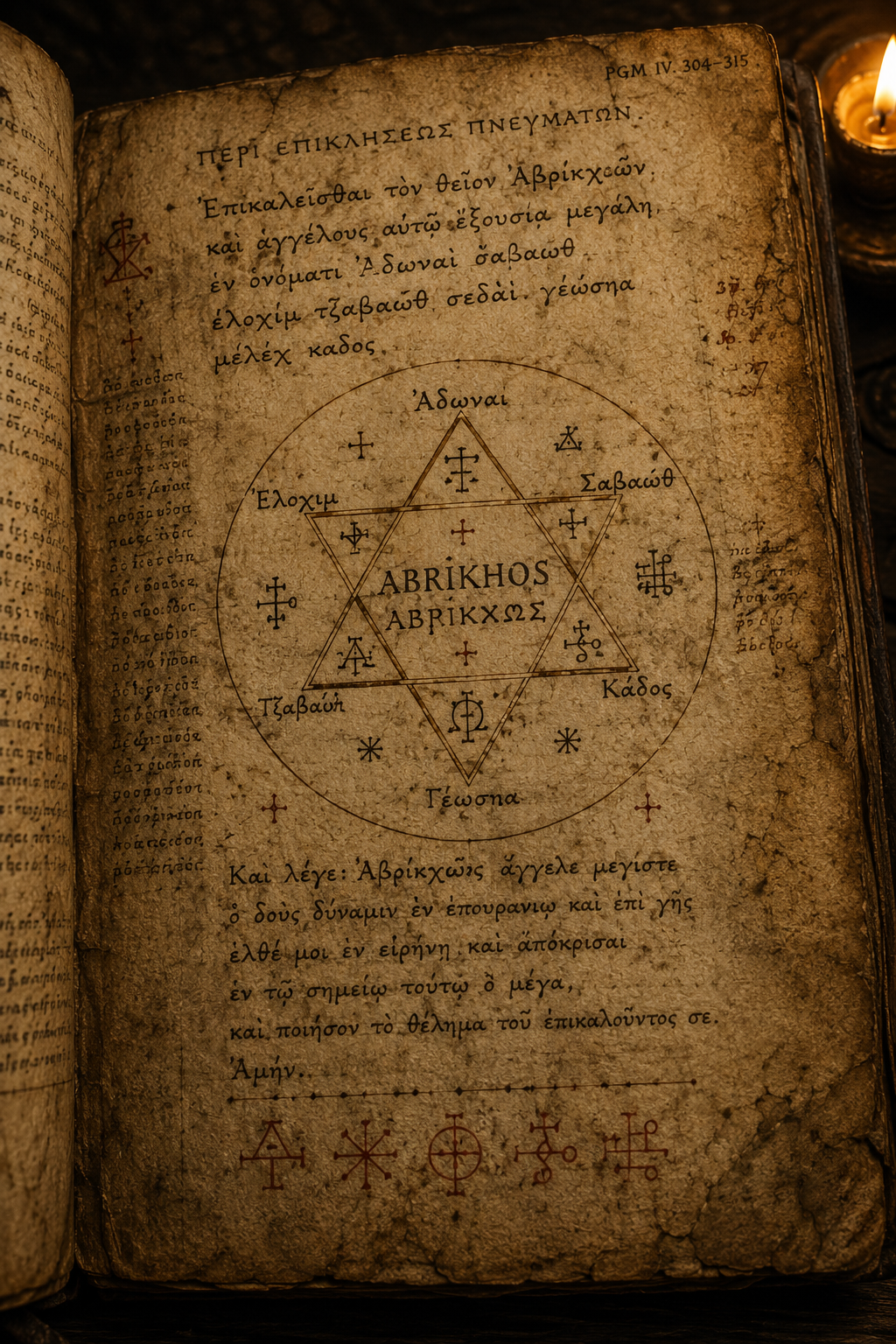
Abrikhos is one of the many enigmatic spirits preserved in the Magical Treatise of Solomon, reminding us that medieval grimoires contain far more than the famous demons of later occult literature. Although the surviving evidence is limited, the spirit’s inclusion demonstrates the remarkable diversity of names and beings recorded within the Solomonic magical tradition.
Rather than presenting invented mythology, studying Abrikhos through its original manuscript provides a more accurate understanding of how obscure spirits functioned within medieval ceremonial magic.
Please note: Very little historical iconography of Abrikhos exists; these illustrations are artistic reconstructions inspired by the Magical Treatise of Solomon, not historical depictions.