

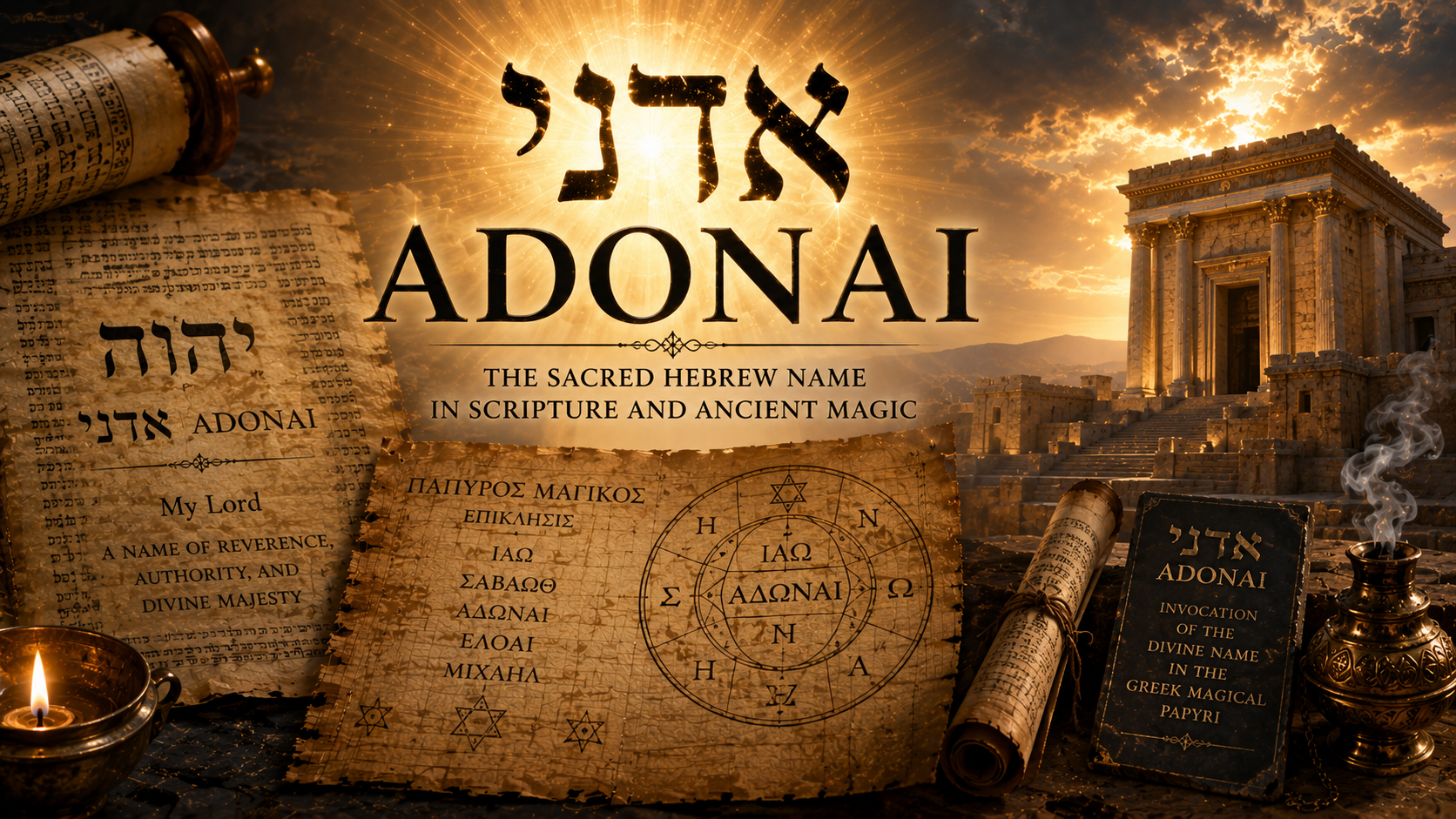
Adonai is one of the most important names for God in the Hebrew Bible and Jewish religious tradition. Derived from the Hebrew word meaning “My Lord,” it became the traditional spoken substitute for the divine name represented by the four Hebrew letters known as the Tetragrammaton (YHWH).
Although Adonai originated within ancient Israelite religion, the name later appeared in the Greek Magical Papyri (PGM), where it was invoked alongside other sacred names believed to possess extraordinary spiritual authority. This blending of Jewish, Egyptian, Greek, and Near Eastern traditions reflects the multicultural religious environment of Roman Egypt.
Today, Adonai remains one of the most revered names of God in Judaism and continues to be studied by historians, theologians, linguists, and scholars of ancient magic.
What Does Adonai Mean?
The Hebrew word Adon means “lord” or “master.”
The form Adonai literally means “My Lord.”
In Jewish tradition, Adonai became the reverent pronunciation used whenever readers encountered the divine name YHWH in Scripture.
Rather than speaking the sacred name directly, Jewish readers substituted Adonai during prayer and public reading, a practice that continues today in many religious communities.
Adonai in the Hebrew Bible
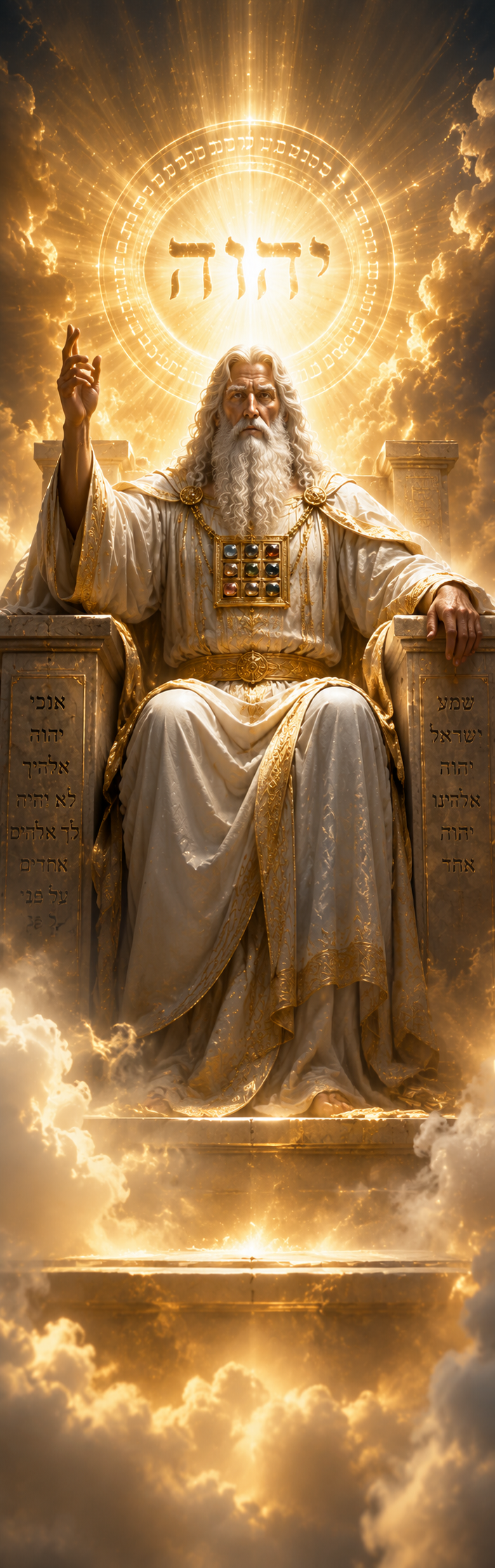
Adonai appears throughout the Hebrew Bible (Tanakh) as a title for God.
It frequently occurs:
- Independently as a divine title
- Together with the Tetragrammaton (often translated as “Lord GOD” in English Bibles)
- In prayers
- In prophetic writings
- In the Psalms
Its widespread use reflects the deep reverence ancient Jewish tradition held for the divine name.
Adonai in the Greek Magical Papyri
The Greek Magical Papyri preserve numerous invocations that combine sacred names drawn from multiple religious traditions.
Among the most common Jewish divine names appearing in these texts are:
- Adonai
- Iao
- Sabaoth
- Eloai
- Michael
Within the PGM, Adonai functions not as a separate deity but as a powerful divine name invoked during rituals involving protection, healing, exorcism, revelation, and communication with the divine.
Ancient practitioners believed that invoking sacred names from respected religious traditions enhanced the effectiveness of magical ceremonies.
Why Does Adonai Appear in Ancient Magic?
Roman Egypt was one of the ancient world’s greatest centers of cultural exchange.
Greek, Egyptian, Jewish, Roman, and Near Eastern religious traditions influenced one another for centuries.
As a result, magical practitioners incorporated sacred names from multiple faiths into their rituals.
The inclusion of Adonai reflects the high reputation Jewish divine names held among many practitioners of Greco-Egyptian magic, rather than evidence of Jewish endorsement of these magical practices.
Is Adonai a Deity?
Adonai is not a separate deity.
Instead, it is one of the traditional Hebrew names and titles for the one God worshipped in Judaism.
This distinction is important because the Greek Magical Papyri often place Adonai alongside the names of other divine beings. In these texts, the name functions as an invocation of divine authority rather than representing an independent god.
Pronunciation
In modern English, Adonai is commonly pronounced: ah-doh-NYE
The Hebrew pronunciation is closer to: ah-doh-NIGH
Pronunciation varies slightly among Jewish communities.
Symbolism
Adonai represents several important theological concepts:
| Symbol | Meaning |
|---|---|
| Lordship | God’s sovereignty |
| Authority | Divine rule over creation |
| Reverence | Respect for the sacred name |
| Covenant | God’s relationship with Israel |
| Worship | Liturgical prayer and devotion |
These meanings arise from biblical and Jewish tradition rather than from the magical texts themselves.
Historical Context
By the Hellenistic and Roman periods, Jewish communities lived throughout Egypt, especially in cities such as Alexandria.
Their scriptures, traditions, and sacred names became known beyond Judaism.
The Greek Magical Papyri demonstrate how practitioners of ritual magic incorporated these revered names into their own ceremonies, creating a remarkable blend of religious traditions while preserving the names themselves.
Historical Sources
Primary historical evidence includes:
- The Hebrew Bible (Tanakh)
- The Septuagint
- The Greek Magical Papyri (PGM)
- Ancient Jewish liturgical traditions
Frequently Asked Questions
What does Adonai mean?
Adonai is a Hebrew word meaning “My Lord.” It is one of the traditional names used for God in Judaism.
Is Adonai God’s name?
Adonai is a title used for God and is traditionally spoken in place of the divine name represented by the Tetragrammaton (YHWH).
Is Adonai mentioned in the Greek Magical Papyri?
Yes. The name appears in several rituals within the Greek Magical Papyri as one of the sacred divine names invoked during magical ceremonies.
Is Adonai a separate deity?
No. Adonai is not an independent deity. It is one of the sacred Hebrew names for the God of Israel.
Why did ancient magicians use the name Adonai?
Practitioners of Greco-Egyptian magic believed that sacred names from respected religious traditions possessed exceptional spiritual authority and therefore included them in ritual invocations.
Adonai is one of the oldest and most sacred names for God in Jewish tradition. While originating in the Hebrew Bible as a reverent title meaning “My Lord,” the name later found its way into the Greek Magical Papyri, where it was invoked alongside other revered divine names in ritual practice.
Its appearance in these magical texts reflects the extraordinary cultural and religious exchange that characterized Roman Egypt, while its enduring significance within Judaism continues to this day.