

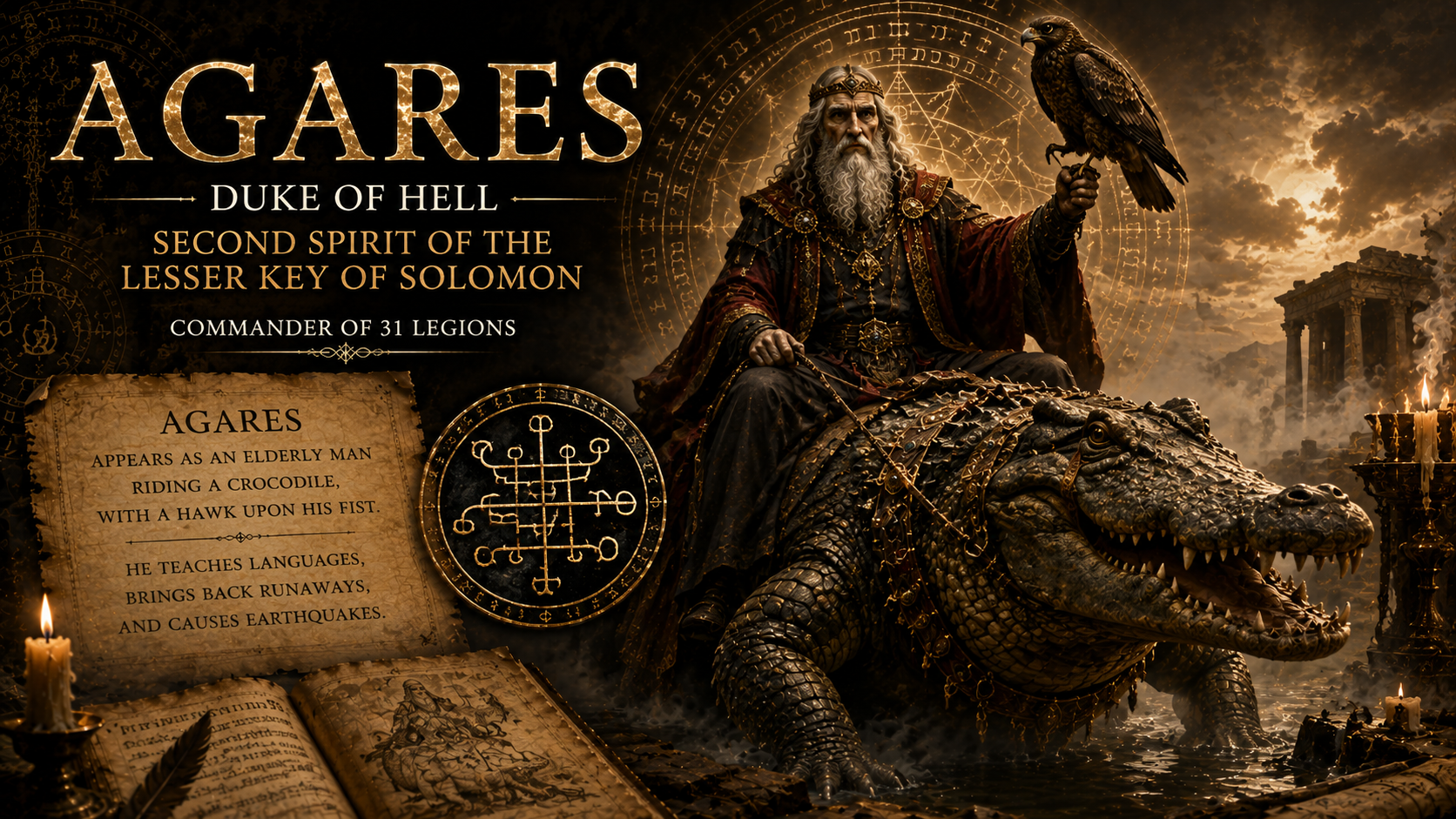
Agares is one of the most recognizable demons described in the Lesser Key of Solomon, also known as the Ars Goetia. Listed as the second spirit of the Goetia, Agares holds the rank of Duke of Hell and commands thirty-one legions of spirits. According to the grimoire, he possesses the unusual abilities to teach languages, recover fugitives, and even cause earthquakes.
Unlike many Goetic spirits that appear as monstrous beasts, Agares is described as an elderly man riding a crocodile while carrying a hawk upon his fist. This striking image has made him one of the most frequently illustrated demons in medieval and modern occult art.
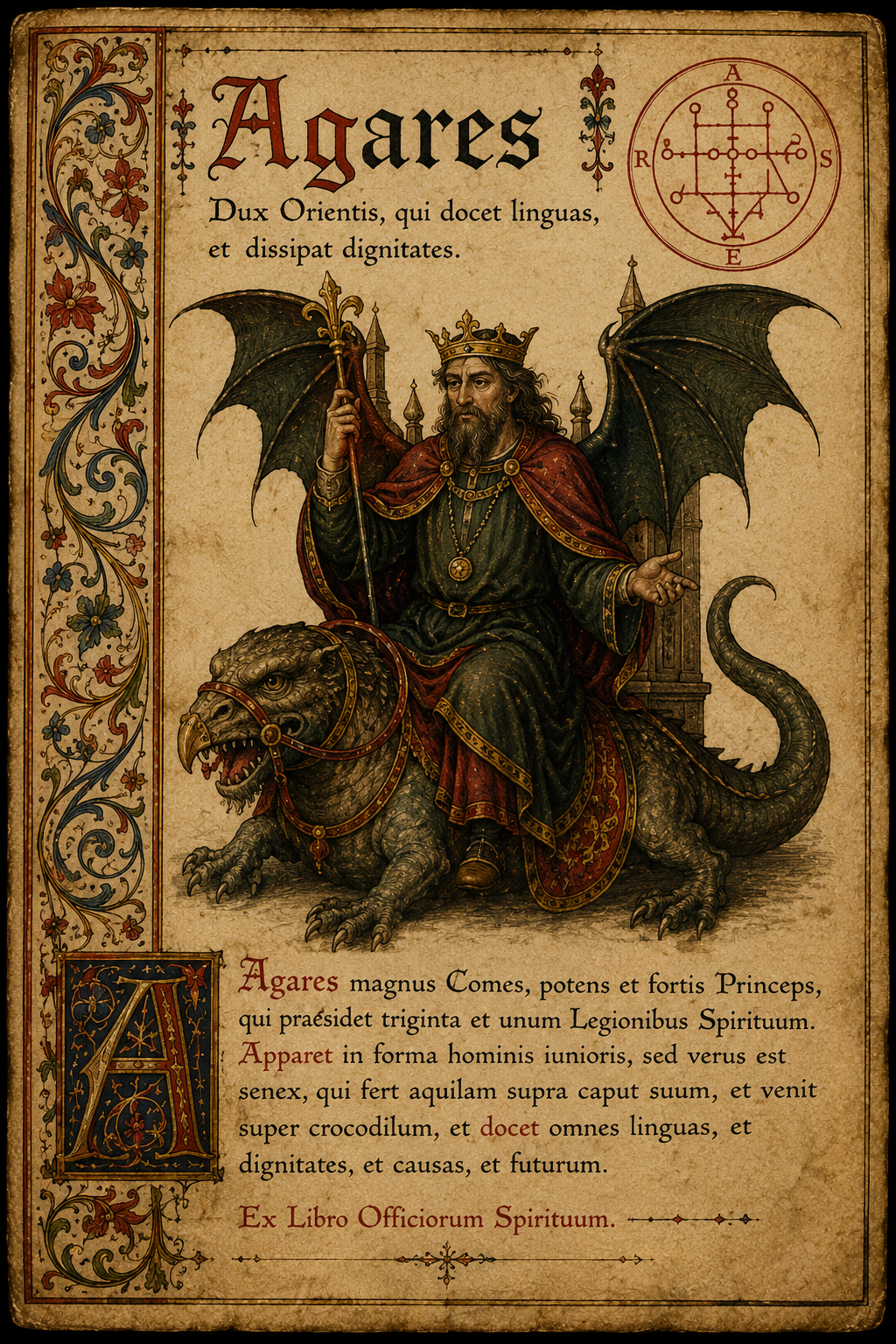
Agares also appears in earlier demonological works, including the Liber Officiorum Spirituum and the Pseudomonarchia Daemonum, demonstrating that his tradition predates the compilation of the Ars Goetia.
Who Is Agares?
In the Ars Goetia, Agares is introduced as the second spirit.
He serves as a Duke under infernal authority and is described as both knowledgeable and powerful. Rather than specializing in wealth or hidden treasure, Agares is primarily associated with language, communication, movement, and the restoration of people who have fled.
His combination of scholarly and destructive abilities makes him one of the more unusual spirits in Solomonic demonology.
Agares in the Lesser Key of Solomon
The Lesser Key of Solomon describes Agares as:
- The second spirit of the Goetia
- A Duke of Hell
- Commander of thirty-one legions
- A teacher of languages
- One who brings back runaways
- A spirit capable of causing earthquakes
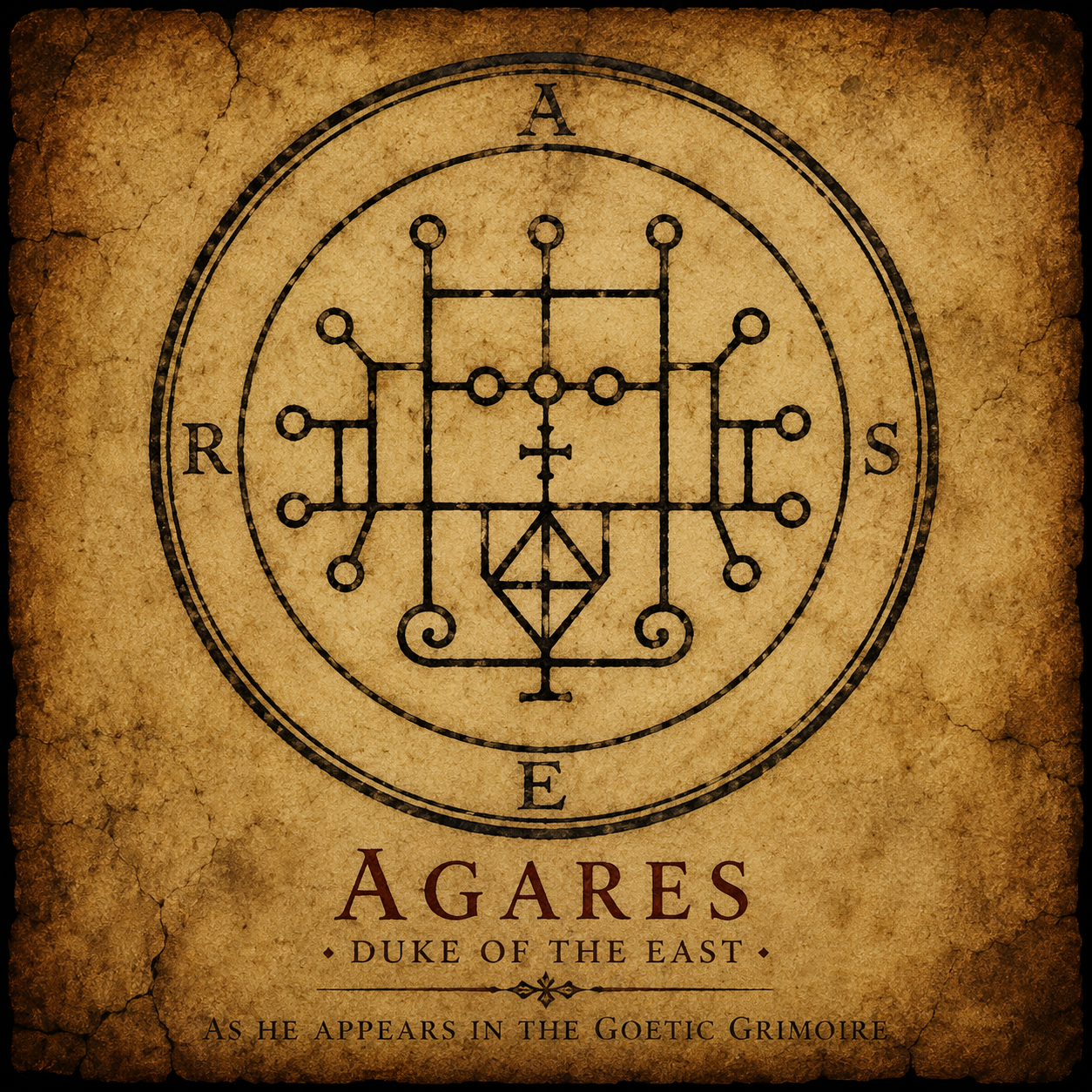
Like the other spirits of the Goetia, Agares is accompanied by his own magical seal, which ceremonial magicians traditionally drew during ritual work.
Agares in the Liber Officiorum Spirituum
The Liber Officiorum Spirituum contains one of the earliest surviving descriptions of Agares.
While the wording differs slightly from later versions found in the Ars Goetia, the essential characteristics remain remarkably consistent.
Both texts describe him as:
- A duke
- A teacher of languages
- A spirit associated with fugitives
- A commander of infernal spirits
The close similarities between these manuscripts demonstrate how medieval demonological traditions evolved through centuries of copying and revision.
Appearance
The Ars Goetia gives Agares one of the most memorable appearances among the seventy-two spirits.
He appears as:
- An elderly man
- Riding a crocodile
- Carrying a hawk upon his fist
Unlike many later artistic interpretations, the original grimoire does not describe Agares with horns, wings, or other stereotypical demonic features.
The crocodile may symbolize primal strength or mastery over dangerous forces, while the hawk evokes vision, authority, and swift movement.
Agares’ Seal
Every spirit in the Ars Goetia possesses a unique magical seal.
Agares’ sigil consists of an intricate geometric design formed from looping lines and intersecting strokes. Ceremonial magicians traditionally reproduced the seal during rituals as a symbolic representation of the spirit rather than as an object believed to possess independent power.
Powers
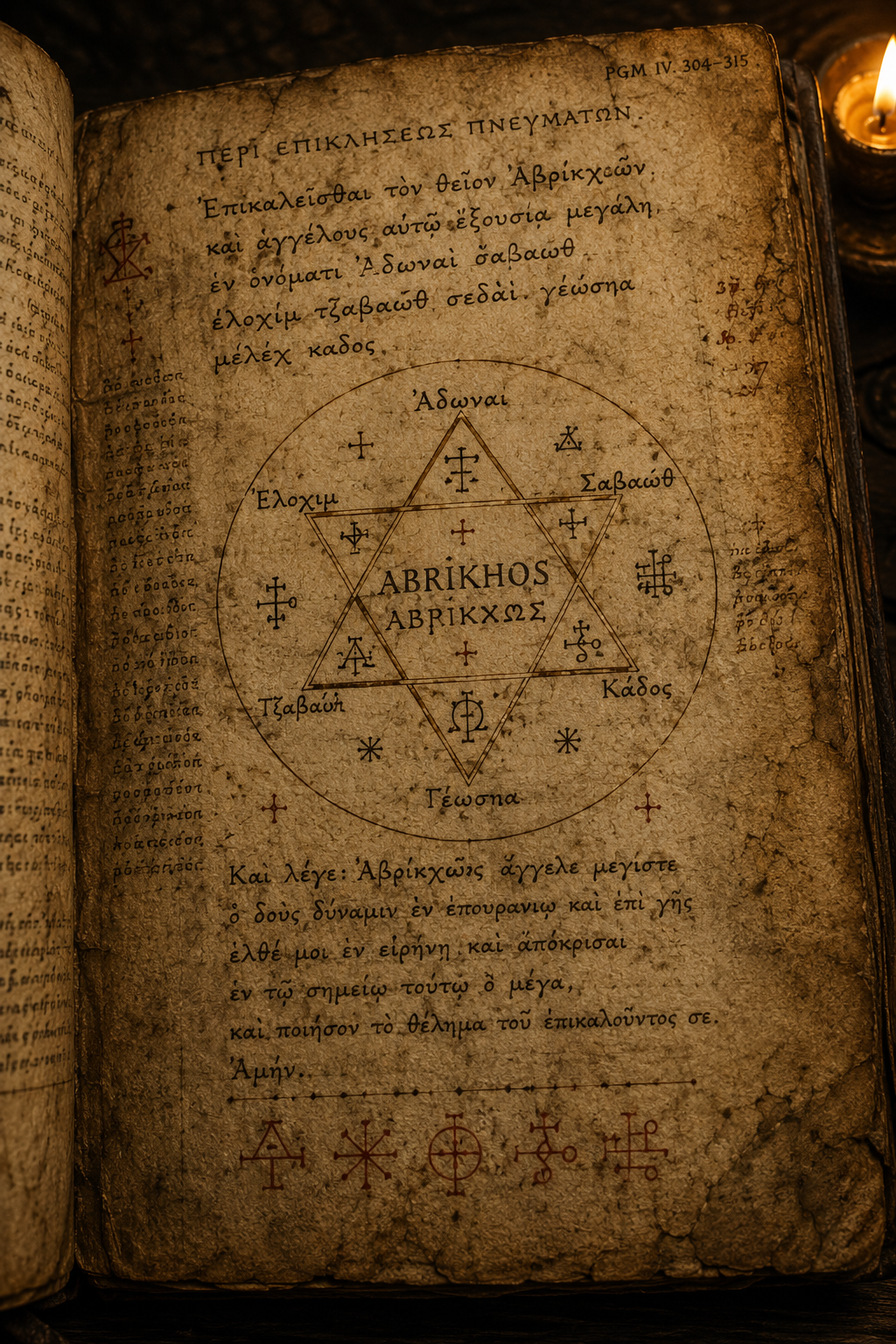
According to the Ars Goetia, Agares possesses several notable abilities.
Teaching Languages
Agares is best known for teaching all languages.
This ability has made him one of the spirits most frequently associated with communication, learning, and knowledge in later occult traditions.
Recovering Runaways
The grimoire claims Agares can return those who have fled.
Medieval readers often interpreted this as the recovery of servants or fugitives, reflecting concerns common in the period when the text was compiled.
Causing Earthquakes
One of Agares’ more unusual powers is the ability to cause earthquakes.
Whether understood literally or symbolically, this attribute distinguishes him from many other Goetic spirits.
Rank and Legions
| Attribute | Description |
|---|---|
| Rank | Duke |
| Spirit Number | 2 |
| Legions Commanded | 31 |
| Primary Sources | Ars Goetia, Liber Officiorum Spirituum |
| Main Abilities | Languages, recovering fugitives, earthquakes |
Symbolism
Although the grimoire offers no explanation for Agares’ imagery, historians and scholars have suggested symbolic interpretations.
| Symbol | Possible Meaning |
|---|---|
| Elderly man | Wisdom and experience |
| Crocodile | Ancient power, danger, primal forces |
| Hawk | Authority, vision, swift action |
| Languages | Knowledge and communication |
These interpretations are modern scholarly observations rather than explicit medieval explanations.
Historical Origins
Agares appears in several important demonological texts compiled between the fifteenth and seventeenth centuries.
His earliest surviving descriptions occur before the publication of the Ars Goetia, demonstrating that his tradition developed gradually within medieval ceremonial magic.
Because no convincing evidence links Agares to an earlier pagan deity, historians generally regard him as a figure that emerged within the grimoire tradition itself.
Historical Sources
Primary historical sources include:
- Liber Officiorum Spirituum
- Lesser Key of Solomon
- Pseudomonarchia Daemonum
These works form the basis for nearly every modern description of Agares.
Frequently Asked Questions
Who is Agares?
Agares is the second spirit listed in the Ars Goetia. He is described as a Duke who commands thirty-one legions and teaches languages.
What does Agares look like?
The grimoire describes him as an elderly man riding a crocodile while carrying a hawk on his fist.
What are Agares’ powers?
According to the Lesser Key of Solomon, Agares teaches languages, returns fugitives, and causes earthquakes.
Is Agares in the Liber Officiorum Spirituum?
Yes. Agares appears in the Liber Officiorum Spirituum, which predates the Ars Goetia and contains an earlier version of his description.
How many legions does Agares command?
The Ars Goetia states that Agares commands thirty-one legions of spirits.
Agares is one of the most distinctive spirits in the Solomonic tradition. His unusual appearance, scholarly abilities, and presence in multiple medieval grimoires have made him one of the best-known demons in Western ceremonial magic. By appearing in both the Liber Officiorum Spirituum and the Lesser Key of Solomon, Agares illustrates how medieval demonology evolved through centuries of manuscript transmission while preserving the core characteristics that continue to define him today.