

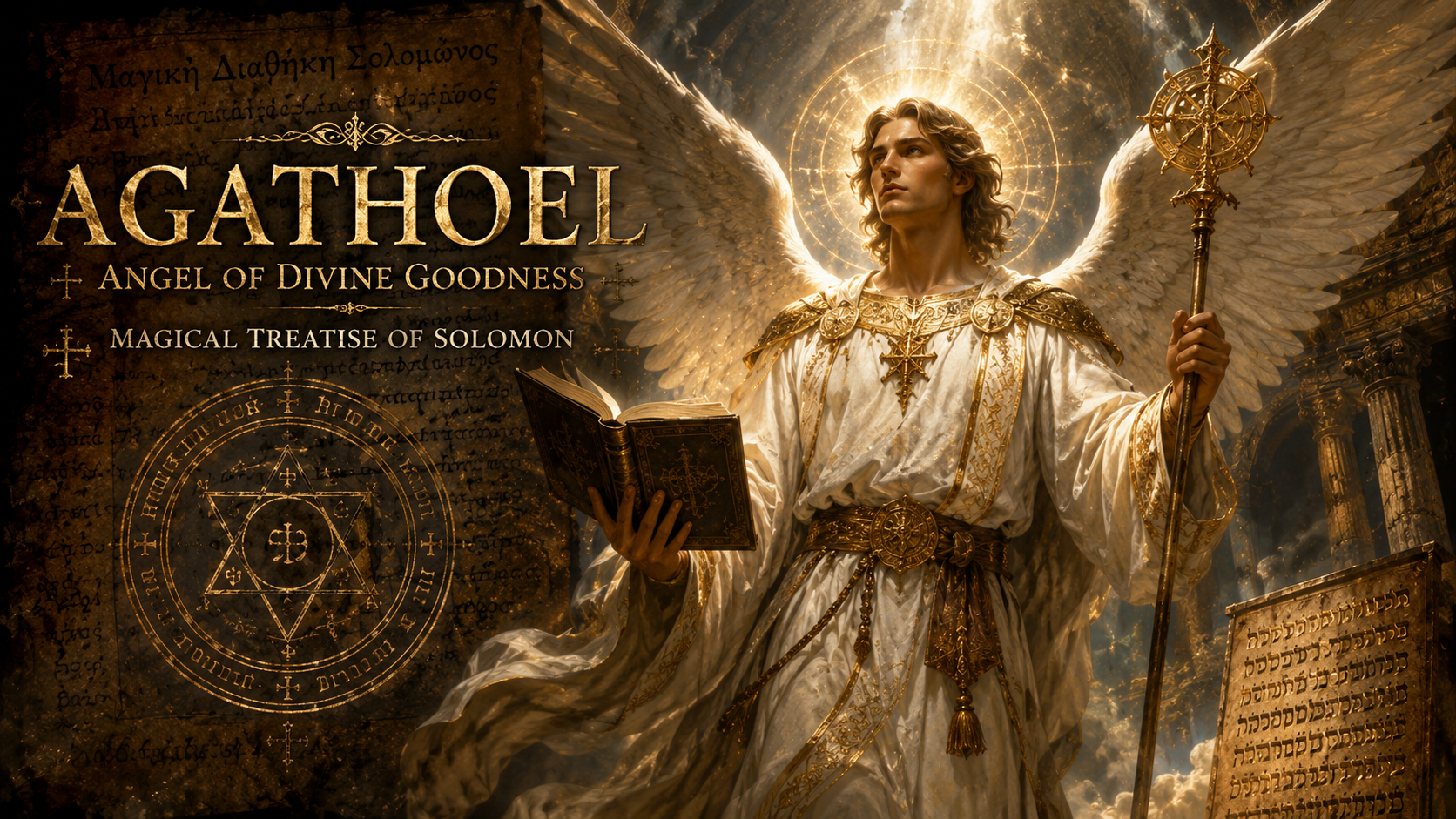
Agathoel is a little-known angelic figure whose name appears in the Magical Treatise of Solomon, one of the lesser-known Solomonic magical manuscripts preserved in the Greek magical tradition. Unlike the famous biblical angels, Agathoel is known almost exclusively through ceremonial magic rather than religious scripture.
Although the surviving manuscripts provide very little information about Agathoel, his inclusion within a Solomonic grimoire reflects the rich tradition of angelic beings invoked during medieval ceremonial rituals. These texts preserve hundreds of sacred names believed to represent heavenly powers acting under God’s authority.
Today, Agathoel is primarily studied by historians of Western esotericism, scholars of angelology, and researchers interested in medieval grimoires.
Who Is Agathoel?
Agathoel is an angel whose name survives in the Magical Treatise of Solomon.
Unlike many well-known angels, he is not accompanied by an extensive narrative, hierarchy, or list of duties. Instead, his name appears among the sacred angelic names used during ritual operations intended to invoke divine assistance and protection.
The absence of additional historical detail is common among many obscure angels preserved in medieval magical manuscripts.
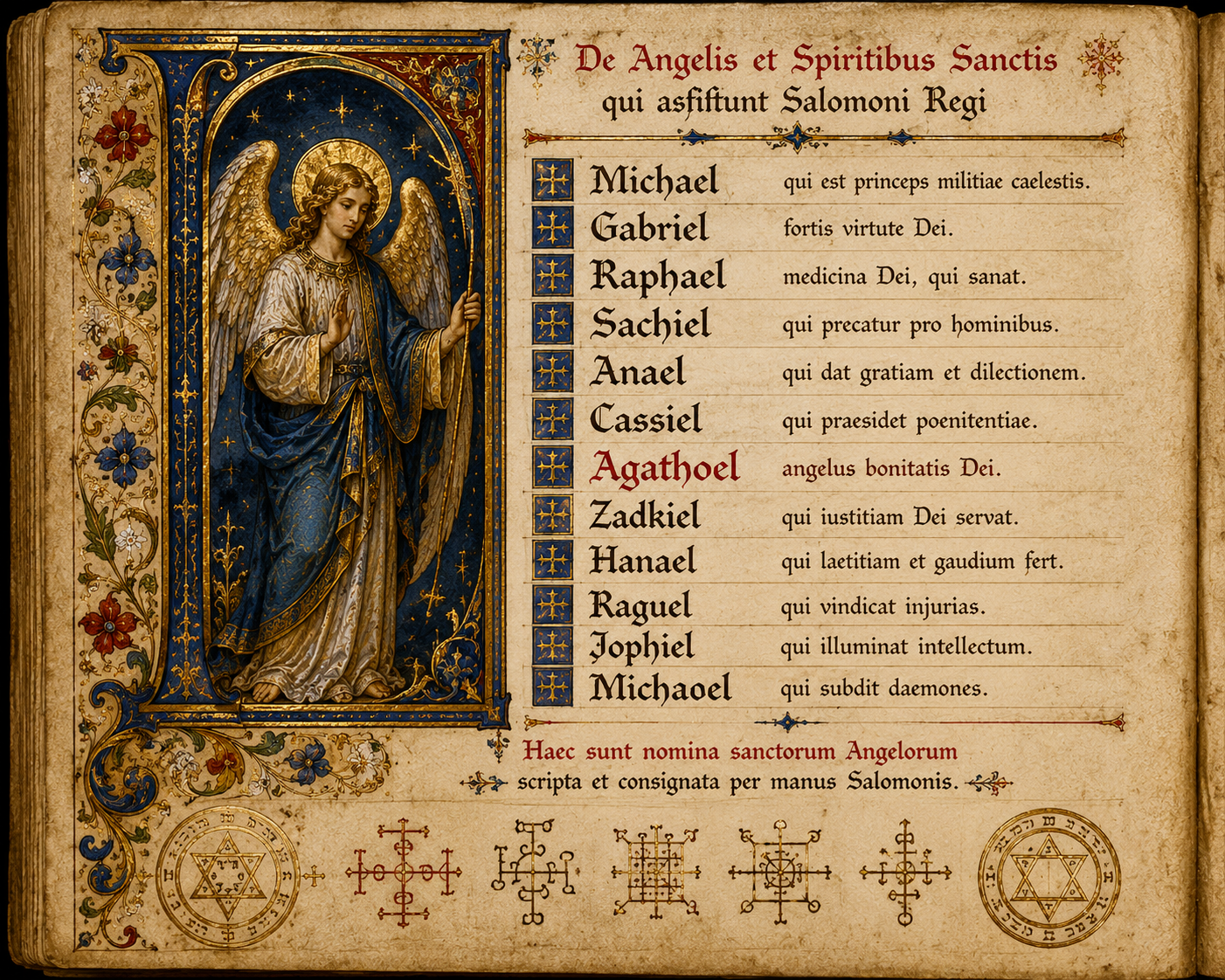
Agathoel in the Magical Treatise of Solomon
The Magical Treatise of Solomon belongs to the wider tradition of Solomonic magic.
These manuscripts commonly include:
- Angelic names
- Divine names
- Ritual prayers
- Protective invocations
- Ceremonial instructions
- Sacred symbols
Within this tradition, angels such as Agathoel serve as heavenly intermediaries acting under divine authority rather than independent supernatural beings.
Meaning of the Name Agathoel
The name Agathoel appears to combine elements from Greek and Hebrew.
Many scholars note two likely components:
- Agathos (Greek), meaning “good” or “virtuous”
- -el, the Hebrew element meaning “God”
If this interpretation is correct, the name could be understood as “Good of God,” “God is Good,” or “The Good One of God.”
Because no medieval manuscript explicitly explains the name, these interpretations remain linguistic reconstructions rather than established historical facts.
Role in Solomonic Magic
The surviving manuscripts do not assign Agathoel a specific office or domain.
However, angels within Solomonic ceremonial magic commonly function as:
- Divine protectors
- Heavenly messengers
- Guardians of sacred rituals
- Witnesses to invocations
- Servants acting under God’s authority
Agathoel’s significance comes primarily from his inclusion within this sacred angelic tradition.
Appearance
No historical description of Agathoel survives.
The Magical Treatise of Solomon does not describe his physical appearance, clothing, or symbols.
Modern artistic reconstructions often portray Agathoel as:
- A radiant angel clothed in white and gold
- Holding a scroll of divine wisdom
- Carrying a staff or scepter
- Standing within celestial light
- Surrounded by sacred geometric patterns
These depictions are modern artistic interpretations rather than historical descriptions.
Historical Context
The Magical Treatise of Solomon reflects the diverse religious world of the medieval eastern Mediterranean.
Its rituals combine influences from:
- Jewish mystical traditions
- Byzantine Christianity
- Greek magical practices
- Earlier Near Eastern ceremonial traditions
Within these texts, obscure angels such as Agathoel appear alongside divine names, prayers, and ritual formulas that sought heavenly protection and authority.
Why Is So Little Known About Agathoel?
Many Solomonic manuscripts survive in only a small number of handwritten copies.
Over centuries, damaged manuscripts, copying errors, and incomplete texts caused much contextual information to disappear.
As a result, numerous angelic names survive with little more than a brief mention.
Agathoel belongs to this fascinating group of little-known celestial beings preserved almost exclusively through medieval grimoires.
Historical Sources
The principal historical source mentioning Agathoel is:
- The Magical Treatise of Solomon
Related topics include:
- Solomonic magic
- Angelology
- Medieval grimoires
- Ceremonial magic
- Greek magical manuscripts
Frequently Asked Questions
Is Agathoel mentioned in the Bible?
No. Agathoel does not appear in the canonical books of the Bible.
Is Agathoel an archangel?
No surviving historical manuscript identifies Agathoel as one of the traditional archangels. He is generally described simply as an angelic figure within the Solomonic magical tradition.
Where is Agathoel mentioned?
Agathoel appears in the Magical Treatise of Solomon, a medieval Solomonic magical manuscript.
What does Agathoel mean?
The name is commonly interpreted as combining the Greek word agathos (“good”) with the Hebrew -el (“God”), though no historical source explicitly defines it.
What are Agathoel’s powers?
The surviving manuscripts do not assign Agathoel specific powers or responsibilities.
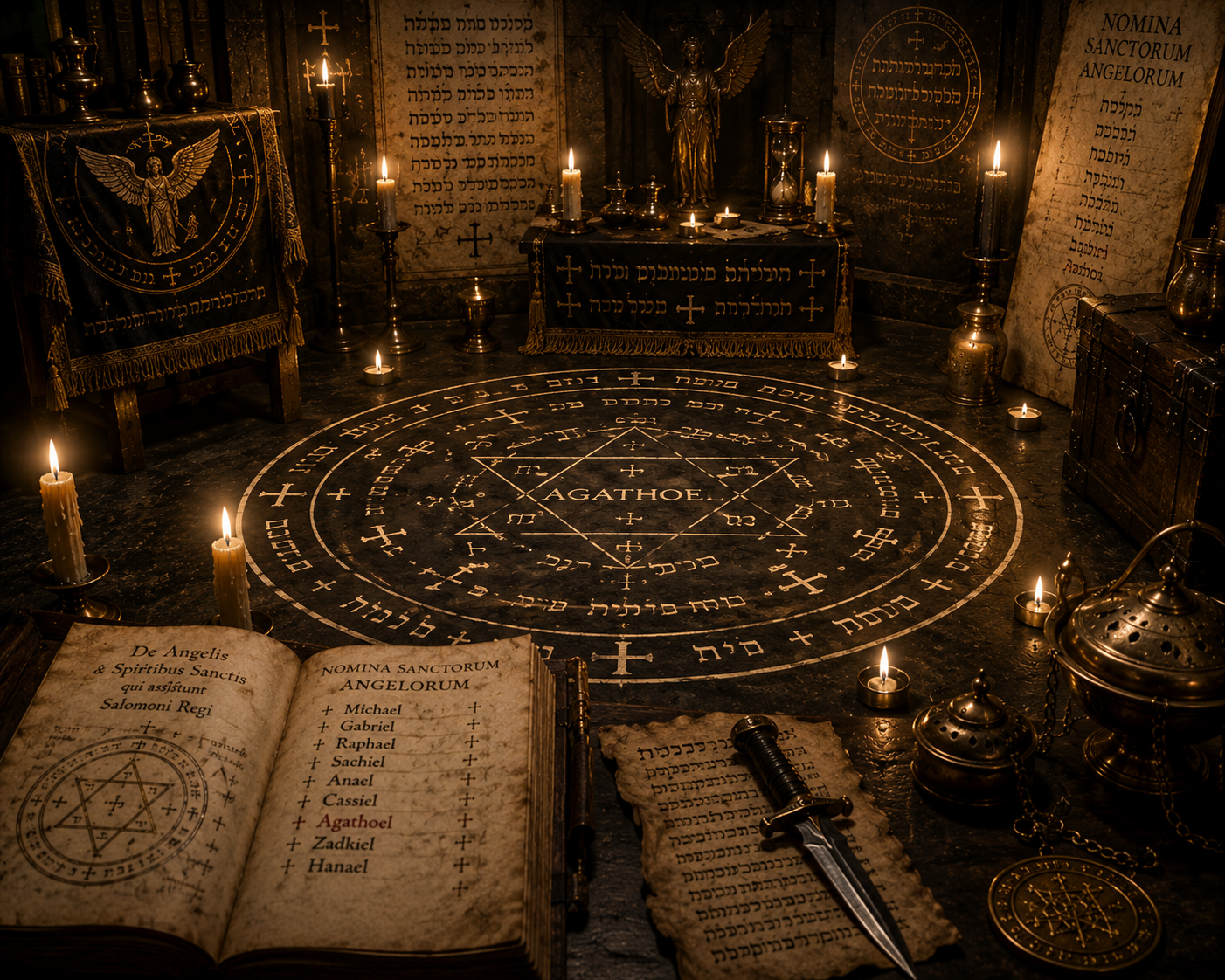
Please note: Very little historical iconography of Agathoel exists; these illustrations are artistic reconstructions inspired by the Magical Treatise of Solomon, not historical depictions.